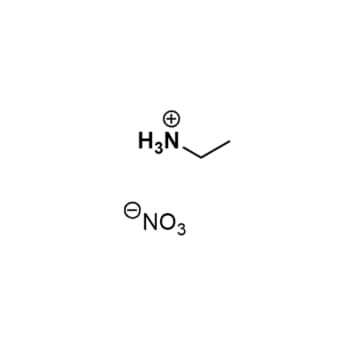
Ethylammonium nitrate, >97%
Price range: $80.72 through $1,158.70
Product Code: IL-0043-SGCAS NO: 22113-86-6
- Chemical Formula: C2H9N2O3
- Synonyms: EAN
- Hydrophilic
- Protic
*This product will incur a $97.00 HazMat fee when the order is placed.*
To order 5kg or more, please email us at info@roco.global
Conductivity: 20.28 mS/cm (20 °C)
SUM Formula: C2H9N2O3
Molecular Weight: 108.1
Melting Point: 9 °C
Density: 1.261
Purity: >97%
Viscosity: 36.5 cP (25 °C)
- SUM Formula: C2H9N2O3
- Molecular Weight: 108.1
- Melting Point: 9 °C
- Density: 1.261
- Viscosity: 36.5 cP (25 °C)
Ethylammonium nitrate, CAS: 22113-86-6
Key Applications:
Electrochemistry & Energy Storage
- Proton-conducting electrolyte in fuel cells, solid‑state electrochemical devices, and proton batteries.
- Medium for studying ion transport, electrode kinetics, and interfacial charge‑transfer mechanisms.
- Additive or co‑solvent to enhance ionic mobility and stability in redox systems.
Biomolecular & Protein Chemistry
- Solvent for protein unfolding, refolding, and stability studies due to its unique hydrogen‑bonding environment.
- Medium for enzyme activity modulation and structure–function investigations.
- Used in spectroscopic and scattering studies of biomolecular dynamics.
Green Chemistry & Catalysis
- Reaction medium for acid‑catalyzed transformations, esterifications, and biomass processing.
- Solvent for environmentally friendly synthesis requiring non‑volatile, recyclable media.
- Facilitates selective catalysis through tunable acidity and ionic microenvironments.
Soft Matter, Colloids & Self‑Assembly
- Solvent for micelle formation, surfactant behavior, and colloidal stability studies.
- Medium for probing hydrogen‑bonded networks, nanostructuring, and mesoscale organization.
- Used in neutron scattering and dielectric spectroscopy to investigate dynamic structuring.
Materials Science & Nanotechnology
- Processing medium for nanoparticles, nanocomposites, and conductive polymer films.
- Solvent for templating, dispersion, and stabilization of nanomaterials.
- Employed in studies of ionic liquid–solid interfaces and surface modification.
Fundamental Physical Chemistry
- Model system for studying protic ionic liquid behavior, hydrogen bonding, and viscosity–conductivity relationships.
- Used in thermodynamic, transport, and molecular dynamics investigations.
Please contact us if you want to learn more or need assistance with your order.
Related products
-

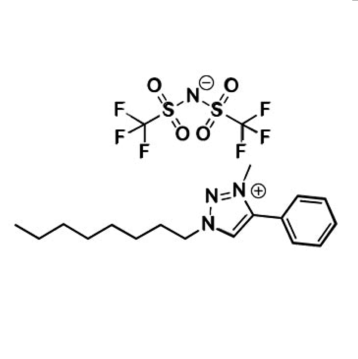
3-methyl-1-octyl-4-phenyl-triazolium bis((trifluoromethyl)sulfonyl)amide
Product Code: TzPhC8FS -

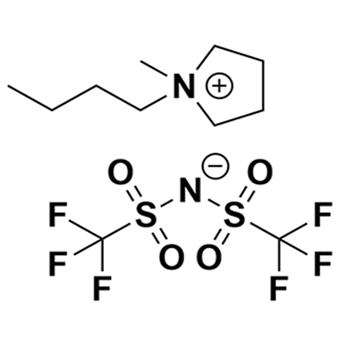
1-Butyl-1-methylpyrrolidinium bis(trifluoromethylsulfonyl)imide, >99.5%
Price range: $106.05 through $1,379.98Product Code: IL-0035-UP -

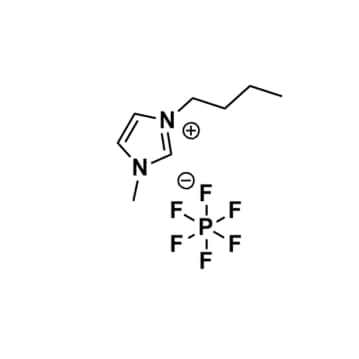
1-Butyl-3-methylimidazolium hexafluorophosphate, >99%
Price range: $57.97 through $3,268.25Product Code: IL-0011-HP -
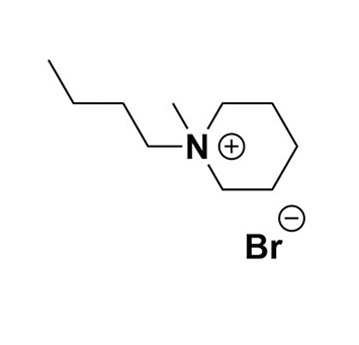
1-Butyl-1-methylpiperidinium bromide, >99%
Price range: $151.42 through $3,466.39Product Code: IL-0153-HP