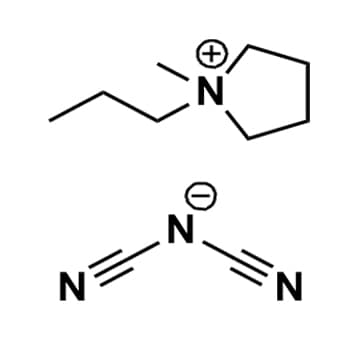
1-Methyl-1-propylpyrrolidinium dicyanamide, >98%
Price range: $321.26 through $3,589.51
Product Code: IL-0249-HPCAS NO: 327022-60-6
- Chemical Formula: C10H18N4
- Synonyms: PMPyrr DCA, PYR 13 DCA, PY 13 DCA, N-Methyl-N-propylpyrrolidinium dicyanamide
- Hydrophilic
SUM Formula: C10H18N4
Molecular Weight: 194.28
Melting Point: <RT
Purity: >98%
- SUM Formula: C10H18N4
- Molecular Weight: 194.28
- Melting Point:
1-Methyl-1-propylpyrrolidinium dicyanamide, CAS: 327022-60-6
Key Applications:
Electrochemical Systems
- Serves as a non‑volatile electrolyte component in advanced battery research, particularly in systems requiring high ionic conductivity and wide electrochemical stability windows.
- Used in supercapacitor and hybrid capacitor studies where DCA⁻ enhances charge transport and reduces viscosity relative to other ionic liquids.
- Functions as a medium for electrodeposition of metals and alloys, enabling smooth, uniform films under water‑free conditions.
Catalysis and Synthesis
- Acts as a polar, aprotic reaction medium for transition‑metal catalysis, including C–C and C–N bond‑forming reactions.
- Supports organocatalytic transformations where the DCA⁻ anion can modulate reaction pathways through weak coordination.
- Employed in mechanistic studies of ionic‑liquid‑assisted catalysis due to its tunable solvation environment.
Separation and Extraction
- Utilized in liquid–liquid extraction of metal ions, especially for systems requiring selective coordination by the dicyanamide anion.
- Applied in separation of organic compounds where low viscosity and high polarity improve mass transfer and phase behavior.
Materials Science and Polymer Processing
- Used as a processing aid and plasticizing medium for polymer synthesis, including ion‑conductive polymer blends.
- Serves as a solvent or co‑solvent for nanoparticle dispersion and surface modification studies.
- Supports fabrication of ionic‑liquid‑based gels and composite electrolytes.
Thermal and Transport Studies
- Selected for fundamental investigations of ionic‑liquid structure–property relationships, including viscosity, conductivity, and ion‑pairing behavior.
- Used in modeling and simulation validation due to its well‑characterized pyrrolidinium–DCA framework.
Please contact us if you want to learn more or if you need assistance with your order.
Related products
-

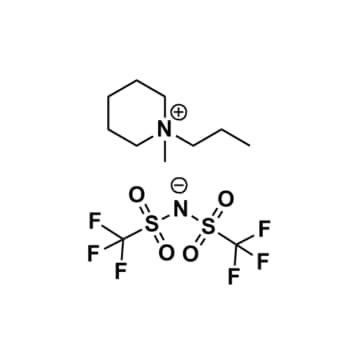
1-Methyl-1-propylpiperidinium bis(trifluoromethylsulfonyl)imide, >99%
Price range: $116.07 through $7,223.03Product Code: IL-0045-HP -

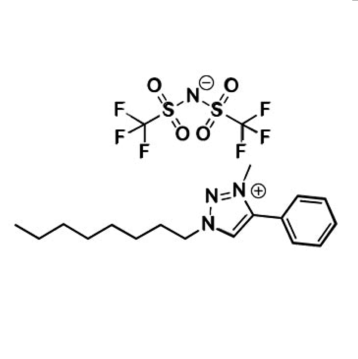
3-methyl-1-octyl-4-phenyl-triazolium bis((trifluoromethyl)sulfonyl)amide
Product Code: TzPhC8FS -

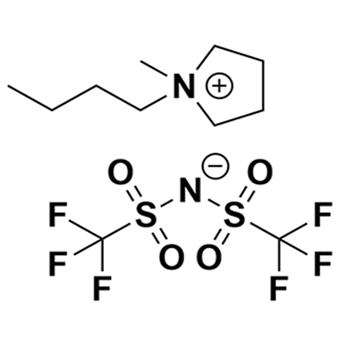
1-Butyl-1-methylpyrrolidinium bis(trifluoromethylsulfonyl)imide, >99.5%
Price range: $106.05 through $1,379.98Product Code: IL-0035-UP -
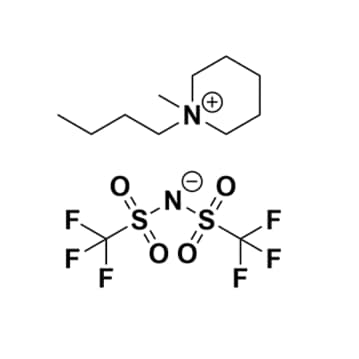
1-Butyl-1-methylpiperidinium bis(trifluoromethylsulfonyl)imide, >99%
Price range: $116.07 through $5,758.00Product Code: IL-0154-HP