
1-Butyl-2-methylpyridinium bromide, >99%
Price range: $267.49 through $6,682.36
Product Code: IL-0128-HPCAS NO: 26576-84-1
- Chemical Formula: C10H16BrN
- Synonyms: Bu-2-Pic Br, Bu2Pic Br, 1-Butyl-2-picolinium bromide, N-Butyl-2-methylpyridinium bromide, N-Butyl-2-picolinium bromide
- Aromatic
SUM Formula: C10H16BrN
Molecular Weight: 230.15
Melting Point: 152 °C
Density: 1.575 g/cm³
Purity: >99%
- SUM Formula: C10H16BrN
- Molecular Weight: 230.15
- Melting Point: 152 °C
- Density: 1.575 g/cm³
1-Butyl-2-methylpyridinium bromide, CAS: 26576-84-1
Key Applications:
Electrochemistry and Energy Systems
- Used as an ionic liquid precursor or supporting electrolyte in electrochemical cells requiring wide electrochemical windows.
- Enhances ion transport in redox systems, particularly where bromide counterions support halide‑mediated charge transfer.
- Suitable for electrodeposition studies involving metals sensitive to coordinating solvents.
Catalysis and Organic Synthesis
- Functions as a phase‑transfer catalyst in biphasic reactions, improving mass transfer and reaction rates.
- Serves as a solvent or co‑solvent for transition‑metal catalysis, especially in systems requiring low‑volatility, thermally stable media.
- Useful in nucleophilic substitution and halide‑exchange reactions where bromide availability is advantageous.
Solvent Extraction and Separation Science
- Applied in liquid–liquid extraction of metal ions, leveraging pyridinium cation–metal interactions.
- Supports selective extraction of lanthanides, actinides, and transition metals in hydrometallurgical workflows.
- Employed in ion‑pair chromatography as a mobile‑phase additive to modulate retention and peak shape.
Materials Science and Polymer Processing
- Acts as a structure‑directing agent in the synthesis of porous materials, including zeolites and metal–organic frameworks.
- Used as a plasticizing or conductivity‑enhancing additive in polymer electrolytes and ion‑conducting films.
- Facilitates dispersion of nanomaterials such as carbon nanotubes and metal oxides.
Spectroscopy and Analytical Chemistry
- Serves as a stabilizing medium for spectroscopic studies requiring low vapor pressure and controlled polarity.
- Utilized in NMR and UV‑Vis experiments to probe ion pairing, solvation, and halide exchange mechanisms.
- Supports electroanalytical methods where bromide ions participate in redox cycling.
Thermal and Chemical Process Applications
- Suitable for high‑temperature reaction media due to its low volatility and thermal robustness.
- Applied in halide‑mediated transformations where controlled bromide activity is required.
- Used in formulation studies for ionic‑liquid‑based heat‑transfer or thermal‑storage systems.
Please contact us if you want to learn more or need assistance with your order.
Related products
-

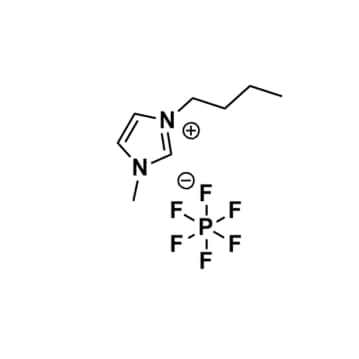
1-Butyl-3-methylimidazolium hexafluorophosphate, >99%
Price range: $57.97 through $3,268.25Product Code: IL-0011-HP -

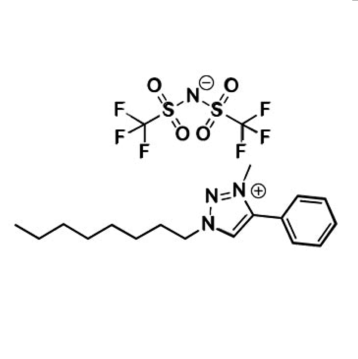
3-methyl-1-octyl-4-phenyl-triazolium bis((trifluoromethyl)sulfonyl)amide
Product Code: TzPhC8FS -
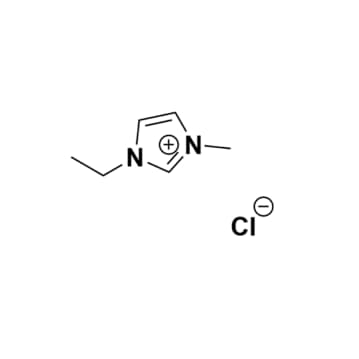
1-Ethyl-3-methylimidazolium chloride, >98%
Price range: $118.78 through $5,050.34Product Code: IL-0093-HP -

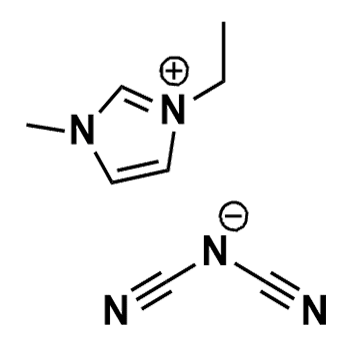
1-Ethyl-3-methylimidazolium dicyanamide, >98%
Price range: $109.03 through $900.25Product Code: IL-0003-HP