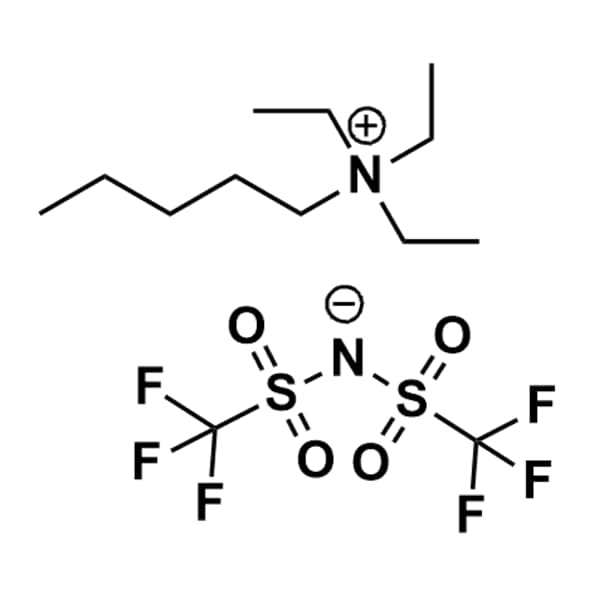
Triethylpentylammonium bis(trifluoromethylsulfonyl)imide, >99%
Price range: $271.69 through $2,271.83
Product Code: IL-0350-HPCAS NO: 906478-91-9
- Chemical Formula: C13H26F6N2O6S2
- Synonyms: Amyltriethylammonium bis(trifluoromethylsulfonyl)imide, N2225 BTA, N2225 TFSI, N2225 NTf2
Conductivity: 1.08 mS/cm
SUM Formula: C13H26F6N2O6S2
Molecular Weight: 452.50
Melting Point: 3 °C
Density: 1.300 g/cm³
Purity: >99%
Viscosity: 93.5 cP
- SUM Formula: C13H26F6N2O6S2
- Molecular Weight: 452.50
- Melting Point: 3 °C
- Density: 1.300 g/cm³
- Viscosity: 93.5 cP
Triethylpentylammonium bis(trifluoromethylsulfonyl)imide, CAS: 906478-91-9
Key Applications:
Electrochemical Systems
- Serves as a hydrophobic, thermally stable ionic liquid electrolyte for high‑voltage electrochemical cells.
- Enhances ionic conductivity and electrochemical window in supercapacitors and advanced battery prototypes.
- Functions as a supporting electrolyte in nonaqueous electrochemical studies requiring low viscosity and high stability.
Lithium and Multivalent Metal Battery Research
- Used as a component in electrolyte formulations for lithium, sodium, and emerging multivalent systems where TFSI⁻ anions improve ion transport and interfacial behavior.
- Supports SEI formation studies due to its chemical robustness and low coordinating nature.
Organic Synthesis and Catalysis
- Acts as a nonvolatile reaction medium for transformations requiring strong thermal and chemical stability.
- Suitable for phase‑transfer catalysis in biphasic systems, leveraging the bulky ammonium cation and hydrophobic TFSI⁻ anion.
- Useful in metal‑catalyzed reactions where low nucleophilicity and high polarity are advantageous.
Separation Science and Extraction
- Employed in liquid–liquid extraction systems for selective partitioning of metal ions, especially in hydrophobic extraction regimes.
- Supports solvent‑free or reduced‑solvent separations due to its low vapor pressure and tunable solvation properties.
Materials Science and Polymer Engineering
- Incorporated into polymer matrices to enhance ionic transport, flexibility, and thermal stability.
- Used in ionogel fabrication for flexible electronics, sensors, and solid‑state electrochemical devices.
- Serves as a plasticizing ionic additive in specialty elastomers and high‑performance polymers.
Surface and Interface Engineering
- Applied as a surface‑active ionic liquid for modifying electrode interfaces and improving charge transfer.
- Useful in lubrication studies where low volatility and high thermal stability are required.
Analytical and Spectroscopic Applications
- Provides a stable, inert medium for spectroscopic measurements under high temperature or low‑volatility conditions.
- Suitable for electroanalytical calibration studies involving TFSI⁻‑based ionic environments.
Please contact us if you want to learn more or need assistance with your order.
Related products
-

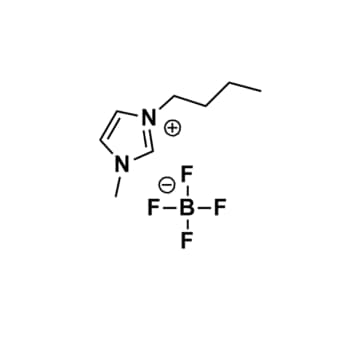
1-Butyl-3-methylimidazolium tetrafluoroborate, >99%
Price range: $52.41 through $2,870.60Product Code: IL-0012-HP -

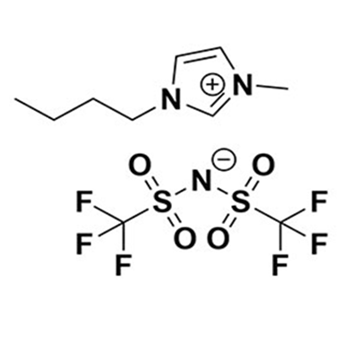
1-Butyl-3-methylimidazolium bis(trifluoromethylsulfonyl)imide, >99.5%
Price range: $106.18 through $5,520.31Product Code: IL-0029-UP -
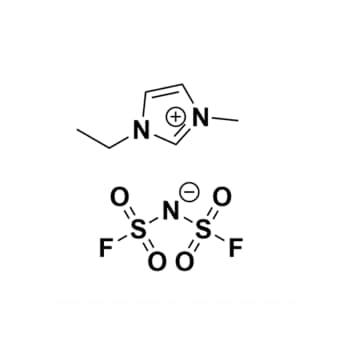
1-Ethyl-3-methylimidazolium bis(fluorosulfonyl)imide, >99%
Price range: $91.96 through $1,224.36Product Code: IL-0342-HP -
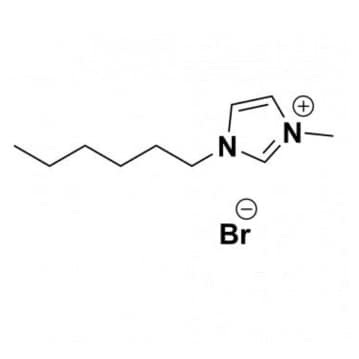
1-Hexyl-3-Methylimidazolium Bromide, >99%
Price range: $161.31 through $1,039.20Product Code: IL-0069-HP