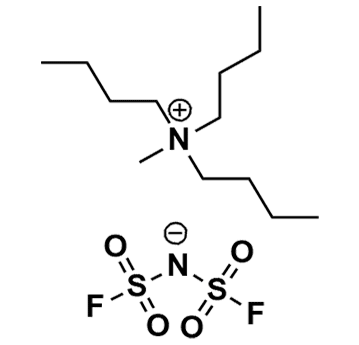
Tributylmethylammonium bis(fluorosulfonyl)imide, >99%
Price range: $169.84 through $2,921.53
Product Code: IL-0346-HPCAS NO: 1425637-15-5
- Chemical Formula: C13H30F2N2O4S2
- Synonyms: N1444 FSI
- Hydrophobic
Conductivity: 4.33 mS/cm
SUM Formula: C13H30F2N2O4S2
Molecular Weight: 380.51
Melting Point: 19 °C
Density: 1.315 g/cm³
ECW: 5.7 V
Purity: >99%
Viscosity: 45.5 cP
- SUM Formula: C13H30F2N2O4S2
- Molecular Weight: 380.51
- Melting Point: 19 °C
- Density: 1.315 g/cm³
- ECW: 5.7 V
- Viscosity: 45.5 cP
Tributylmethylammonium bis(fluorosulfonyl)imide, CAS: 1425637-15-5
Key Applications:
1. Electrolytes for Energy Storage
- Lithium‑ion and sodium‑ion batteries
TBMA‑FSI serves as a co‑salt or ionic‑liquid additive to improve ionic conductivity, widen the electrochemical stability window, and enhance SEI formation on carbonaceous anodes.
- High‑temperature electrolytes
The FSI⁻ anion supports low viscosity and high ionic mobility, enabling stable operation in elevated‑temperature cells.
- Redox‑flow and hybrid flow batteries
Used as a supporting electrolyte to tune viscosity, solubility, and redox kinetics of active species.
2. Electrochemical Devices & Interfaces
- Supercapacitors and hybrid capacitors
Provides high ionic conductivity and stable double‑layer formation, especially in wide‑temperature‑range devices.
- Electrodeposition media
TBMA‑FSI can support smooth, uniform metal deposition (e.g., Al, Zn, rare‑earth metals) due to its wide electrochemical window and low water content.
- Electrochemical sensors
Enhances signal stability and reduces solvent volatility in ionic‑liquid‑based sensing films.
3. Solvents and Reaction Media
- Green solvent for organic synthesis
The FSI⁻ anion offers strong solvating power for polar and organometallic species, enabling catalyst stabilization and improved reaction rates.
- Phase‑transfer catalysis
The bulky ammonium cation facilitates ion shuttling between immiscible phases.
- Polymerization media
Supports controlled radical polymerization and ionic‑liquid‑templated polymer synthesis.
4. Materials Processing & Surface Engineering
- Plasticizer or additive in polymer electrolytes
Improves mechanical flexibility and ionic conductivity in PEO‑based or PVDF‑based systems.
- Surface modification
Forms stable ionic‑liquid layers on metals, ceramics, and carbon materials for lubrication, corrosion resistance, or wettability control.
- Nanomaterials synthesis
Acts as a templating or stabilizing medium for nanoparticles, nanowires, and porous materials.
5. Separation Science & Extraction
- Selective extraction of metal ions
TBMA‑FSI’s hydrophobicity and ion‑pairing behavior support extraction of transition metals, lanthanides, and actinides.
- Gas absorption media
Useful for SO₂, HF, and other acidic gases due to the FSI⁻ anion’s affinity and stability.
- Liquid–liquid separations
Enables tunable partitioning in biphasic ionic‑liquid systems.
6. Thermal & Chemical Stability Applications
- Heat‑transfer and thermal‑storage fluids
High thermal stability and low vapor pressure make it suitable for niche high‑temperature systems.
- Antistatic and antiscaling additives
Ionic‑liquid additives in industrial formulations to reduce charge buildup or modify surface interactions.
Please contact us if you want to learn more or need assistance with your order.
Related products
-

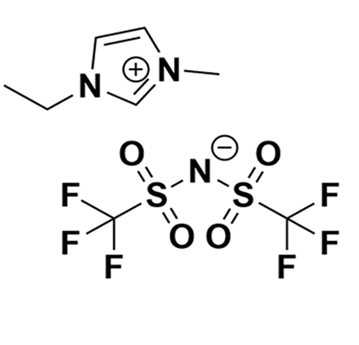
1-Ethyl-3-methylimidazolium bis(trifluoromethylsulfonyl)imide, >99.5%
Price range: $77.88 through $1,109.64Product Code: IL-0023-UP -

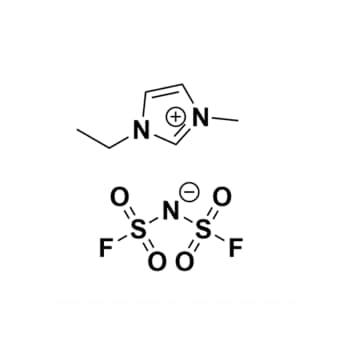
1-Ethyl-3-methylimidazolium bis(fluorosulfonyl)imide, >99%
Price range: $91.96 through $1,224.36Product Code: IL-0342-HP -

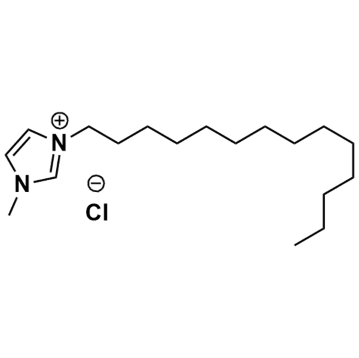
1-Methyl-3-tetradecylimidazolium chloride, >98%
Price range: $243.38 through $2,855.90Product Code: IL-0141-HP -
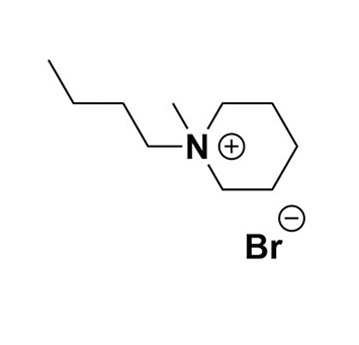
1-Butyl-1-methylpiperidinium bromide, >99%
Price range: $151.42 through $3,466.39Product Code: IL-0153-HP