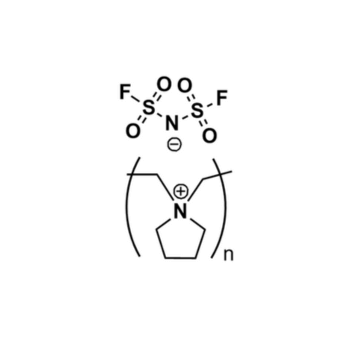
Poly(diallyldimethylpyrrolidinium) bis(fluorosulfonyl)imide, >98%
Price range: $121.62 through $2,158.47
Product Code: IL-0362-HPCAS NO: n/a
- Chemical Formula: (C8H16N2O4F2S2)n
- Synonyms: Poly(DiMPyrr) FSI
- Polymer
SUM Formula: (C8H16N2O4F2S2)n
Melting Point: 230 °C
Density: 1.35 g/cm³
Purity: >98%
- SUM Formula: (C8H16N2O4F2S2)n
- Melting Point: 230 °C
- Density: 1.35 g/cm³
Poly(diallyldimethylpyrrolidinium) bis(fluorosulfonyl)imide
Key Applications:
Electrochemical and Energy‑Storage Applications
- Solid and quasi‑solid polymer electrolytes for lithium, sodium, and multivalent metal batteries, leveraging high ionic conductivity and broad electrochemical stability.
- Binder–electrolyte hybrids in composite electrodes, improving interfacial contact and mechanical cohesion while maintaining ion transport.
- Ion‑gel matrices for flexible and stretchable energy‑storage devices.
- Electrochemical capacitors and hybrid supercapacitors, where the polymeric cation framework enhances mechanical stability under cycling.
Ion Transport, Membranes, and Separations
- Polymer membranes for ion‑selective transport, including Li⁺, Na⁺, and organic cations, supported by the FSI⁻ anion’s high mobility.
- Gas separation membranes, particularly for CO₂‑selective transport due to the polymer’s tunable free volume and ionic interactions.
- Solvent‑resistant filtration media for harsh chemical environments where conventional polymers degrade.
Advanced Materials and Coatings
- Antistatic and charge‑dissipative coatings, benefiting from permanent ionic conductivity and environmental stability.
- Surface‑modification layers for metals, ceramics, and carbon materials to improve wettability, adhesion, and interfacial ion transport.
- High‑temperature, non‑volatile polymer matrices for specialty composites requiring thermal and chemical resilience.
Catalysis and Chemical Processing
- Immobilized ionic liquid phases (poly‑IL supports) for heterogeneous catalysis, enabling catalyst retention and recyclability.
- Polymeric media for electro‑catalytic interfaces, where ionic mobility and mechanical integrity are both required.
- Stabilizing matrices for reactive intermediates in electro‑organic synthesis.
Sensors, Actuators, and Soft Electronics
- Ionically conductive layers in soft actuators, electroactive polymers, and artificial muscles.
- Solid‑state ionic transducers for humidity, pressure, and chemical sensing.
- Flexible electronic components, including dielectric layers and ion‑gel gate dielectrics for organic field‑effect transistors.
Additive Manufacturing and Processing
- Functional polymer inks for 3D printing and direct‑write fabrication of conductive or ion‑transporting structures.
- Rheology modifiers in composite formulations where ionic interactions tune viscosity and curing behavior.
Please contact us if you want to learn more or need assistance with your order.
Related products
-

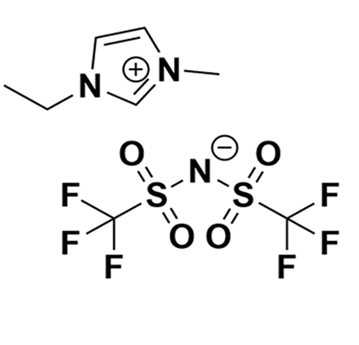
1-Ethyl-3-methylimidazolium bis(trifluoromethylsulfonyl)imide, >99.5%
Price range: $77.88 through $1,109.64Product Code: IL-0023-UP -

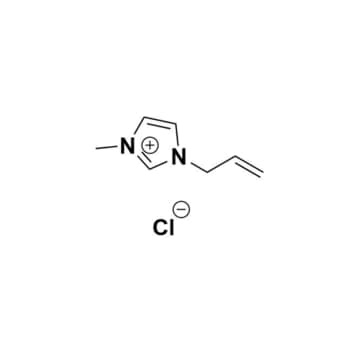
1-Allyl-3-methylimidazolium chloride, >98%
Price range: $106.18 through $4,539.33Product Code: IL-0022-HP -
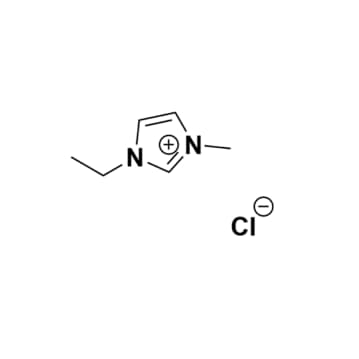
1-Ethyl-3-methylimidazolium chloride, >98%
Price range: $118.78 through $5,050.34Product Code: IL-0093-HP -
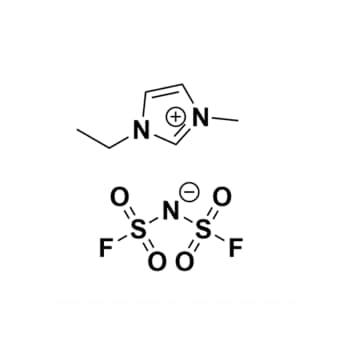
1-Ethyl-3-methylimidazolium bis(fluorosulfonyl)imide, >99%
Price range: $91.96 through $1,224.36Product Code: IL-0342-HP