![N-[2-(Methacryloyloxy)ethyl]-N,N-dimethylbutylammonium bis(trifluoromethylsulfonyl)imide,1616483-28-3](https://mlhxrkjoggqr.i.optimole.com/w:359/h:345/q:mauto/f:best/https://roco.global/wp-content/uploads/2024/07/IL-0363-HP.png)
N-[2-(Methacryloyloxy)ethyl]-N,N-dimethylbutylammonium bis(trifluoromethylsulfonyl)imide, >98%
Price range: $91.96 through $1,592.34
Product Code: IL-0363-HPCAS NO:1616483-28-3
- Chemical Formula: C14H24F6N2O6S2
- Synonyms: N1124MAcryl BTA, Butyl[2-(methacryloyloxy)ethyl](dimethyl)ammonium Bis(trifluoromethanesulfonyl)imide
- Polymerisable
Conductivity: 135.9 μS/cm
SUM Formula: C14H24F6N2O6S2
Molecular Weight: 494.46
Melting Point: -19°C
Density: 1.43 g/cm³
Purity: >98%
Viscosity: 1269 cP
- SUM Formula: C14H24F6N2O6S2
- Molecular Weight: 494.46
- Melting Point: -19°C
- Density: 1.43 g/cm³
- Viscosity: 1269 cP
N-[2-(Methacryloyloxy)ethyl]-N,N-dimethylbutylammonium bis(trifluoromethylsulfonyl)imide, CAS: 1616483-28-3
Key Application:
Polymer and Materials Engineering
- Ionic liquid monomer for polymerizable ionogels
The pendant methacrylate group enables direct incorporation into polymer networks, producing ionogels with high ionic conductivity, mechanical flexibility, and thermal stability.
- Crosslinkable electrolyte matrices
Supports UV‑ or thermally initiated polymerization to form robust, solvent‑free polymer electrolytes for advanced electrochemical devices.
- Functional copolymers with tunable charge density
Copolymerizes with acrylates, methacrylates, and fluorinated monomers to yield materials with controlled ionic content for membranes, coatings, and dielectric films.
Energy Storage and Electrochemical Systems
- Solid and quasi‑solid electrolytes for lithium and sodium batteries
The TFSI⁻ anion provides wide electrochemical stability, low viscosity in monomeric form, and high ion mobility once polymerized.
- Electrochemical actuator and sensor matrices
Polymerized ionic networks support ion‑driven actuation and stable transduction in flexible devices.
- Redox‑active polymer hosts
Serves as a charged polymer backbone for immobilizing redox mediators or enhancing ion transport in hybrid battery architectures.
Membrane and Separation Technologies
- Polymerized ionic liquid membranes (PILMs)
Enables fabrication of dense, ion‑conductive membranes with high chemical resistance and low gas permeability.
- CO₂‑selective transport layers
The TFSI⁻ counterion and quaternary ammonium cation support CO₂‑philic interactions when incorporated into crosslinked films.
- Solvent‑resistant nanofiltration media
Polymerized structures exhibit strong resistance to organic solvents, making them suitable for harsh‑media separations.
Surface Modification and Coatings
- Antistatic and charge‑dissipative coatings
The polymerizable cationic monomer forms durable, permanently ionic surfaces with stable conductivity.
- Adhesion‑promoting layers
The methacrylate functionality enables covalent grafting onto polymer substrates, improving interfacial strength in composites and laminates.
- Low‑surface‑energy ionic coatings
The TFSI⁻ anion imparts hydrophobicity and chemical resistance, useful for protective films and specialty finishes.
Advanced Manufacturing and Photopolymerization
- UV‑curable ionic resins
Compatible with photoinitiators for rapid curing in additive manufacturing, microfabrication, and thin‑film processing.
- Patternable ion‑conductive microstructures
Supports lithographic patterning of ionic domains for microfluidics, soft electronics, and ion‑transport architectures.
Analytical and Laboratory Uses
- Stationary phase modifier in chromatography
Polymerizable ionic liquid layers can be grafted onto silica or polymer supports to tune selectivity and retention.
- Matrix component for ion‑conductive composites
Useful in preparing reference materials, calibration films, and ion‑transport test structures.
Please contact us if you want to learn more or need assistance with your order.
Related products
-

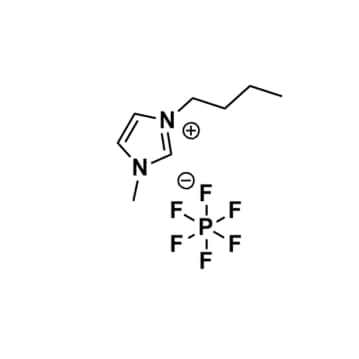
1-Butyl-3-methylimidazolium hexafluorophosphate, >99%
Price range: $57.97 through $3,268.25Product Code: IL-0011-HP -

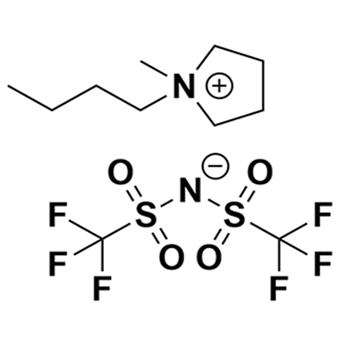
1-Butyl-1-methylpyrrolidinium bis(trifluoromethylsulfonyl)imide, >99.5%
Price range: $106.05 through $1,379.98Product Code: IL-0035-UP -
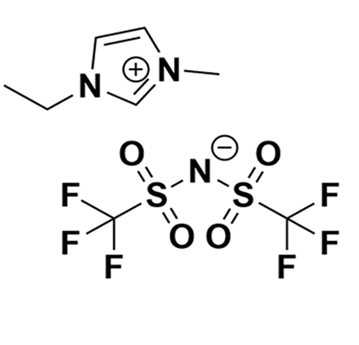
1-Ethyl-3-methylimidazolium bis(trifluoromethylsulfonyl)imide, >99.5%
Price range: $77.88 through $1,109.64Product Code: IL-0023-UP -
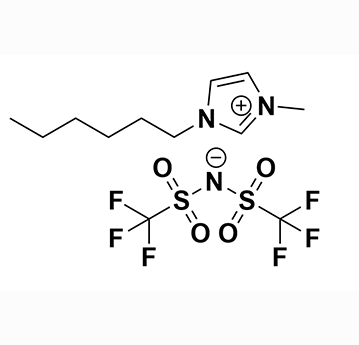
1-Hexyl-3-methylimidazolium bis(trifluoromethylsulfonyl)imide, >99%
Price range: $137.20 through $7,436.75Product Code: IL-0098-HP