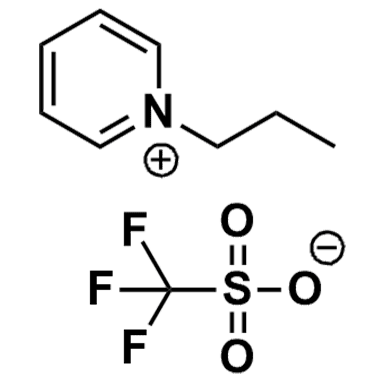
1-Propylpyridinium triflate, >99%
Price range: $652.54 through $5,289.52
Product Code: IL-0250-HPCAS NO: 1242154-93-3
- Chemical Formula: C9H12F3NO3S
- Synonyms: N-Propylpyridinium triflate, 1-Propylpyridinium trifluoromethanesulfonate, PropPy OTf
- Aromatic
SUM Formula: C9H12F3NO3S
Molecular Weight: 271.26
Melting Point: <RT
Purity: >98%
- SUM Formula: C9H12F3NO3S
- Molecular Weight: 271.26
- Melting Point:
1-Propylpyridinium triflate, CAS: 1242154-93-3
Key Applications:
Electrochemical Systems
- Serves as a stable ionic medium for electrochemical studies requiring low volatility and high ionic conductivity.
- Useful as a supporting electrolyte in voltammetry, impedance spectroscopy, and redox‑active material screening.
- Compatible with metal‑ion coordination environments where non‑coordinating anions are preferred.
Catalysis and Organic Synthesis
- Functions as a polar, thermally robust reaction medium for acid‑catalyzed and transition‑metal‑mediated transformations.
- Supports regioselective and chemoselective pathways in electrophilic substitutions, cyclizations, and heterocycle formation.
- Provides enhanced solubility for organometallic catalysts and ionic intermediates.
Materials Science and Polymer Processing
- Employed as a processing aid or dopant in conductive polymers, ion‑exchange matrices, and hybrid organic–inorganic materials.
- Enhances ionic mobility in polymer electrolytes and membranes designed for energy storage or separation technologies.
- Suitable for thin‑film fabrication workflows requiring low vapor pressure and controlled ionic content.
Thermal and Solvation Applications
- Offers a wide liquid‑phase stability window for high‑temperature reaction environments.
- Acts as a strong, polar, aprotic solvent for solubilizing salts, polar organics, and catalytic species.
- Useful in extraction and partitioning studies where ionic selectivity and low volatility are required.
Analytical and Spectroscopic Use
- Provides a clean ionic background for NMR, IR, and UV‑Vis studies of charged or highly polar analytes.
- Stabilizes reactive intermediates during mechanistic investigations.
- Suitable for ion mobility and mass spectrometry sample preparation where non‑coordinating anions minimize adduct formation.
Energy and Ion‑Transport Research
- Investigated as a component in prototype electrolytes for batteries, supercapacitors, and electrochemical capacitors.
- Supports ion‑transport studies due to its well‑defined cation structure and triflate anion mobility.
- Compatible with mixed‑ionic systems exploring cation–anion pairing effects.
Please contact us if you want to learn more or need assistance with your order.
Related products
-

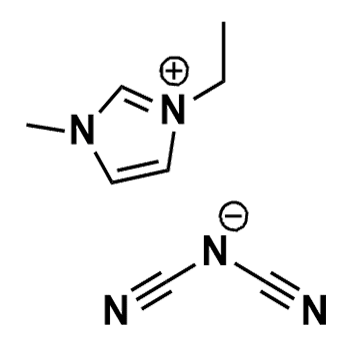
1-Ethyl-3-methylimidazolium dicyanamide, >98%
Price range: $109.03 through $900.25Product Code: IL-0003-HP -

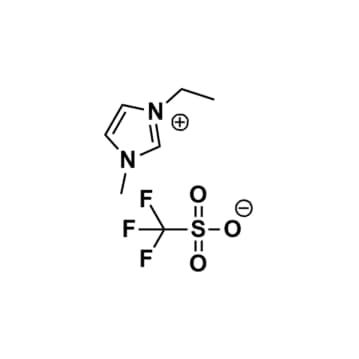
1-Ethyl-3-methylimidazolium triflate, >99%
Price range: $49.57 through $3,674.56Product Code: IL-0009-HP -

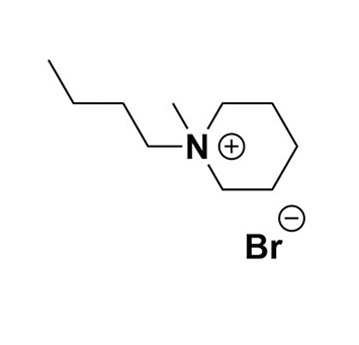
1-Butyl-1-methylpiperidinium bromide, >99%
Price range: $151.42 through $3,466.39Product Code: IL-0153-HP -
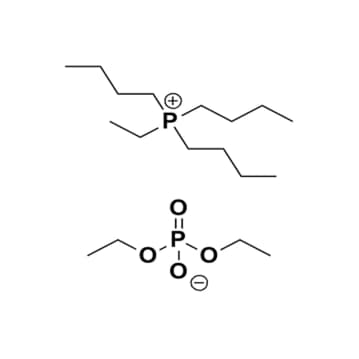
Tributylethylphosphonium diethyl phosphate, >95%
Price range: $134.35 through $1,582.45Product Code: IN-0018-TG