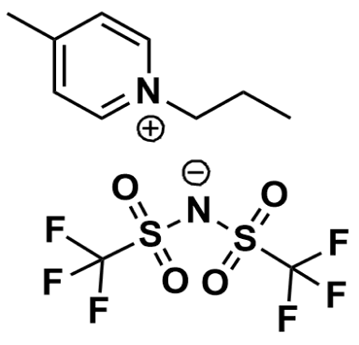
1-Propyl-4-methylpyridinium bis(trifluoromethylsulfonyl)imide, >99%
Price range: $186.77 through $10,263.47
Product Code: IL-0218-HPCAS NO: 1456878-01-5
- Chemical Formula: C11H14F6N2O4S2
- Synonyms: 1-Propyl-4-picolinium bis(trifluoromethylsulfonyl)imide, N-Propyl-4-methylpyridinium bis(trifluoromethylsulfonyl)imide, N-Propyl-4-picolinium bis(trifluoromethylsulfonyl)imide, Pro4Pic BTA, Prop-4-Pic BTA , Pro4Pic NTf2, Pro4Pic TFSI, Pro4Pic BTI
- Weakly-coordinating anion
- Hydrophobic
- Aromatic
Conductivity: 5.72 mS/cm (30 °C)
SUM Formula: C11H14F6N2O4S2
Molecular Weight: 416.36
Melting Point: 32 °C
Density: 1.45 g/cm³ (22 °C)
Purity: >99%
Viscosity: 51.0 cP (25°C)
- SUM Formula: C11H14F6N2O4S2
- Molecular Weight: 416.36
- Melting Point: 32 °C
- Density: 1.45 g/cm³ (22 °C)
- Viscosity: 51.0 cP (25°C)
1-Ethyl-4-methylpyridinium bis(trifluoromethylsulfonyl)imide, CAS: 712355-03-8
Key Applications:
1. Thermal Behavior and High‑Temperature Stability
- Exhibits the characteristic high thermal stability of pyridinium–TFSI ionic liquids, often remaining stable well above 300^\circ\text{C} depending on atmosphere.
- Useful as a thermal reference fluid or heat‑transfer medium in research settings where non‑volatile, decomposition‑resistant liquids are required.
- Supports thermogravimetric analysis (TGA) benchmarking for pyridinium IL families, enabling comparative studies of cation substitution effects on decomposition onset.
- Suitable for high‑temperature electrochemical environments, where volatility and flammability must be minimized.
2. Electrochemical Systems
- Functions as a non‑flammable electrolyte component in lithium, sodium, and magnesium battery research.
- Provides a wide electrochemical stability window, enabling high‑voltage cathode studies.
- Serves as a solvent or co‑solvent for redox‑active species in supercapacitors and flow batteries.
- Useful in ionic‑liquid‑based electrodeposition of metals and alloys, especially where high-temperature operation is advantageous.
3. Solvent and Processing Medium
- Acts as a polar, aprotic, non‑volatile solvent for organometallic and coordination chemistry.
- Supports catalyst immobilization and biphasic catalysis, particularly in systems requiring thermal robustness.
- Effective for polymer dissolution, processing, and ion‑gel formation, especially for high‑temperature or vacuum‑processed materials.
4. Materials Science and Surface Engineering
- Employed in surface modification, including IL‑assisted self‑assembly and thin‑film deposition.
- Useful as a templating medium for nanoparticle synthesis, where thermal stability allows controlled high‑temperature growth.
- Supports ion‑gel electrolytes for flexible electronics and dielectric layers.
5. Tribology and Lubrication
- High thermal stability and low vapor pressure make it suitable as a lubricant or lubricant additive for metal–metal and metal–ceramic interfaces.
- Performs well under high load and elevated temperature, reducing wear and friction in demanding environments.
6. Gas Separation and Capture
- TFSI‑based pyridinium ILs show tunable solubility for gases such as CO₂, SO₂, and H₂S, enabling use in absorption studies.
- Thermal robustness allows operation in temperature‑swing absorption processes.
7. Analytical and Spectroscopic Applications
- Serves as a calibration or matrix medium in thermal and electrochemical characterization of ionic liquids.
- Useful for NMR, IR, and Raman studies exploring cation–anion interactions and temperature‑dependent structural changes.
Please contact us if you want to learn more or need assistance with your order.
Related products
-

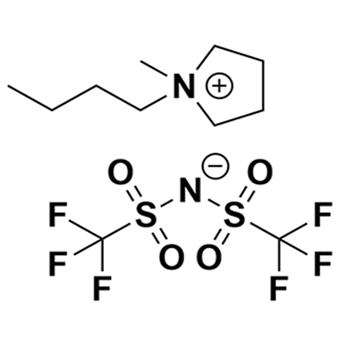
1-Butyl-1-methylpyrrolidinium bis(trifluoromethylsulfonyl)imide, >99.5%
Price range: $106.05 through $1,379.98Product Code: IL-0035-UP -

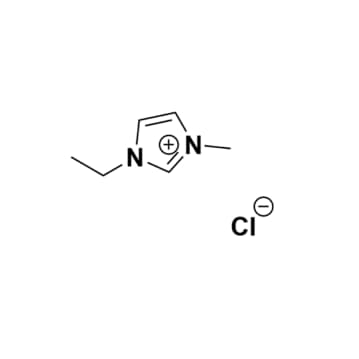
1-Ethyl-3-methylimidazolium chloride, >98%
Price range: $118.78 through $5,050.34Product Code: IL-0093-HP -
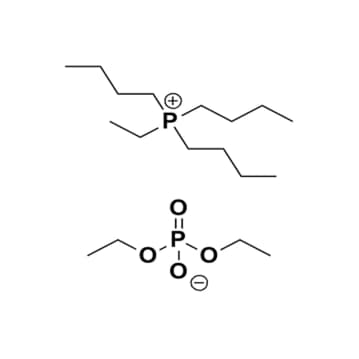
Tributylethylphosphonium diethyl phosphate, >95%
Price range: $134.35 through $1,582.45Product Code: IN-0018-TG -
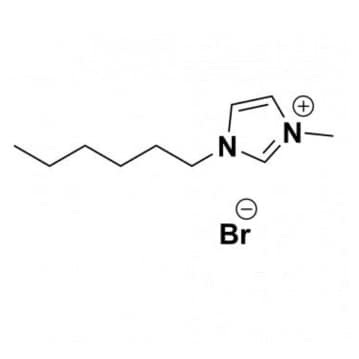
1-Hexyl-3-Methylimidazolium Bromide, >99%
Price range: $161.31 through $1,039.20Product Code: IL-0069-HP