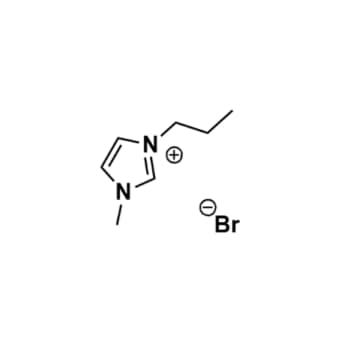
1-Methyl-3-propylimidazolium bromide, >99%
Product Code: RIL-0096-HPCAS NO: 85100-76-1
- Chemical Formula: C7H13BrN2
- Synonyms: PMIM Br, C1C3Im Br, Im13 Br
- Aromatic
This is a custom synthesis product. Price upon request
Please email us at info@roco.global to place an order
SUM Formula: C7H13BrN2
Molecular Weight: 205.10
Melting Point: 28 °C
Density: 1,399 g/cm³
Purity: >99%
Viscosity: 2954 cP
- SUM Formula: C7H13BrN2
- Molecular Weight: 205.10
- Melting Point: 28 °C
- Density: 1,399 g/cm³
- Viscosity: 2954 cP
1-Methyl-3-propylimidazolium bromide, CAS: 85100-76-1
Key Applications:
1. Phase‑Transfer and Catalytic Media
- Serves as a high‑efficiency phase‑transfer catalyst for nucleophilic substitutions, alkylations, and condensations where bromide availability and imidazolium polarity enhance reaction rates.
- Functions as a polar, non‑volatile reaction medium for transition‑metal catalysis, enabling improved solubility of organometallic complexes and ionic substrates.
- Useful in microwave‑assisted synthesis, where its ionic character accelerates heating and reduces reaction times.
2. Electrochemical and Conductive Applications
- Acts as a supporting electrolyte in electrochemical studies requiring stable, well‑defined ionic conductivity.
- Suitable for ionic‑liquid‑modified electrodes, improving charge transfer and film stability in voltammetric and impedance experiments.
- Employed in template‑directed electrodeposition of metals and semiconductors due to its controlled ion mobility and thermal stability.
3. Materials Science and Polymer Integration
- Used as a structure‑directing agent in the preparation of mesoporous silica, metal oxides, and hybrid inorganic–organic materials.
- Serves as an ionic plasticizer or compatibilizer in polymer matrices, enhancing flexibility, ionic transport, and dispersion of charged fillers.
- Supports ion‑exchange and surface‑functionalization protocols for membranes, resins, and nanoparticle coatings.
4. Extraction, Separation, and Solvent Systems
- Effective in liquid–liquid extraction of metal ions, dyes, and organics due to its tunable polarity and strong ion‑pairing behavior.
- Applied in chromatographic method development as an additive to adjust retention, peak shape, and selectivity.
- Useful in CO₂‑related sorption studies and gas–liquid equilibria research where short‑chain imidazolium salts provide benchmark data.
5. Molecular Recognition and Supramolecular Chemistry
- Employed in host–guest assembly studies, where the imidazolium cation participates in hydrogen bonding and π‑cation interactions.
- Supports self‑assembly of ionic frameworks, including ionic liquid crystals and ordered thin films.
6. Benchmarking and Fundamental Research
- Commonly used as a model short‑chain imidazolium bromide for studying ion pairing, viscosity, conductivity, and solvation dynamics.
- Provides a reference system for computational chemistry, including MD simulations and DFT studies of cation–anion interactions.
Please contact us if you want to learn more or need assistance with your order.
Additional information
| Weight | 25 g |
|---|
Related products
-

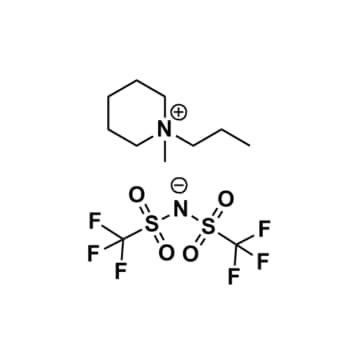
1-Methyl-1-propylpiperidinium bis(trifluoromethylsulfonyl)imide, >99%
Price range: $116.07 through $7,223.03Product Code: IL-0045-HP -

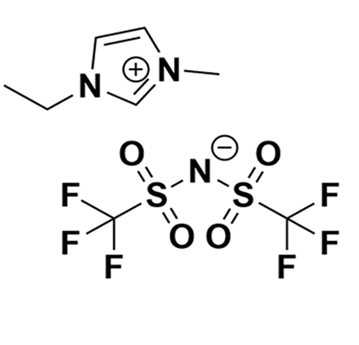
1-Ethyl-3-methylimidazolium bis(trifluoromethylsulfonyl)imide, >99.5%
Price range: $77.88 through $1,109.64Product Code: IL-0023-UP -
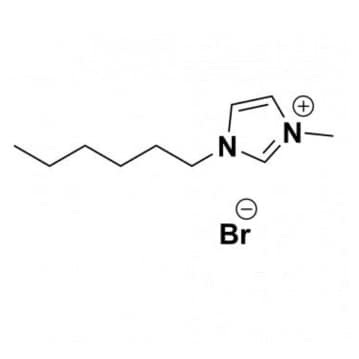
1-Hexyl-3-Methylimidazolium Bromide, >99%
Price range: $161.31 through $1,039.20Product Code: IL-0069-HP -
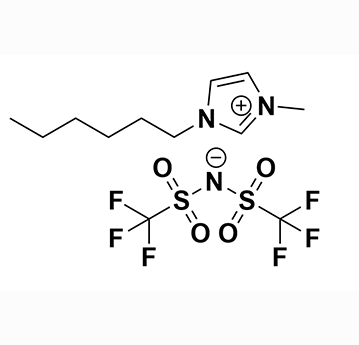
1-Hexyl-3-methylimidazolium bis(trifluoromethylsulfonyl)imide, >99%
Price range: $137.20 through $7,436.75Product Code: IL-0098-HP