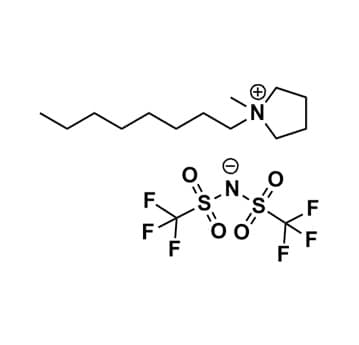
1-Methyl-1-octylpyrrolidinium bis(trifluoromethylsulfonyl)imide, >99%
Price range: $215.08 through $2,853.54
Product Code: IL-0121-HPCAS NO: 927021-43-0
- Chemical Formula: C15H28F6N2O4S2
- Synonyms: OMPyrr BTA, OMPyrr NTf2, OMPyrr TFSI, OMPyrr BTI, PYR18 TFSI, PY18 TFSI, N-Methyl-N-octylpyrrolidinium bis(trifluoromethylsulfonyl)imide
- Weakly-coordinating anion
- Hydrophobic
Conductivity: 1.27 mS/cm
SUM Formula: C15H28F6N2O4S2
Molecular Weight: 478.52
Melting Point: <RT
Density: 1.29 g/cm³
Purity: >99%
Viscosity: 168 cP
- SUM Formula: C15H28F6N2O4S2
- Molecular Weight: 478.52
- Melting Point:
- Density: 1.29 g/cm³
- Viscosity: 168 cP
1-Methyl-1-octylpyrrolidinium bis(trifluoromethylsulfonyl)imide, CAS: 927021-43-0
Key Applications
Energy Storage and Electrochemical Systems
- Serves as a hydrophobic ionic liquid electrolyte for high‑voltage lithium, sodium, and multivalent metal batteries.
- Enables stable operation in devices requiring wide electrochemical windows and low volatility.
- Used in supercapacitors and hybrid capacitors where long‑chain pyrrolidinium cations improve interfacial stability and suppress parasitic reactions.
Thermal and Chemical Process Media
- Functions as a high‑temperature, non‑flammable heat‑transfer medium due to its thermal robustness and low vapor pressure.
- Suitable for solvent‑free or reduced‑solvent reaction environments in synthetic chemistry, particularly under moisture‑sensitive or high‑temperature conditions.
- Applied as a hydrophobic extraction phase for metal ions, organometallic complexes, and fluorinated species.
Separation Science and Materials Processing
- Utilized in liquid–liquid extraction systems where long‑alkyl pyrrolidinium ILs enhance phase separation and selectivity.
- Acts as a medium for polymer dissolution, modification, and processing, especially for fluorinated or highly hydrophobic polymers.
- Supports membrane fabrication and ion‑transport materials where high hydrophobicity and low miscibility with water are required.
Surface, Interface, and Tribological Applications
- Employed as a boundary‑lubrication additive or neat lubricant in demanding environments, leveraging its thermal stability and low volatility.
- Forms stable, low‑conductivity interfacial layers useful in anti‑corrosion and surface‑modification studies.
Analytical and Spectroscopic Uses
- Serves as a non‑volatile matrix or solvent for spectroscopic measurements requiring minimal background signal.
- Used in electroanalytical research to study ion transport, double‑layer structure, and interfacial kinetics in hydrophobic IL systems.
Please contact us if you want to learn more or need assistance with your order.
Related products
-

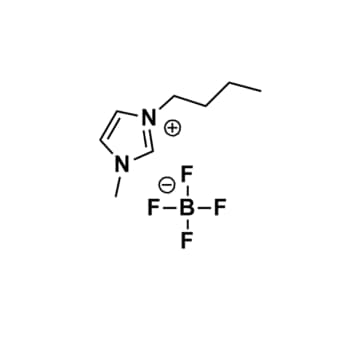
1-Butyl-3-methylimidazolium tetrafluoroborate, >99%
Price range: $52.41 through $2,870.60Product Code: IL-0012-HP -
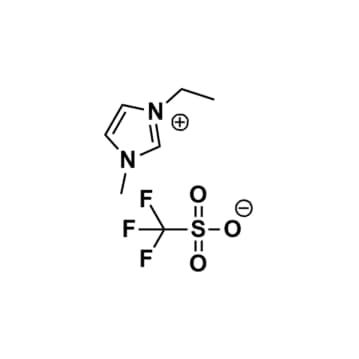
1-Ethyl-3-methylimidazolium triflate, >99%
Price range: $49.57 through $3,674.56Product Code: IL-0009-HP -
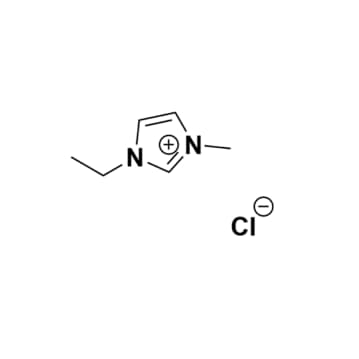
1-Ethyl-3-methylimidazolium chloride, >98%
Price range: $118.78 through $5,050.34Product Code: IL-0093-HP -

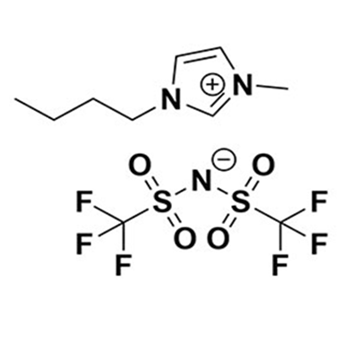
1-Butyl-3-methylimidazolium bis(trifluoromethylsulfonyl)imide, >99.5%
Price range: $106.18 through $5,520.31Product Code: IL-0029-UP