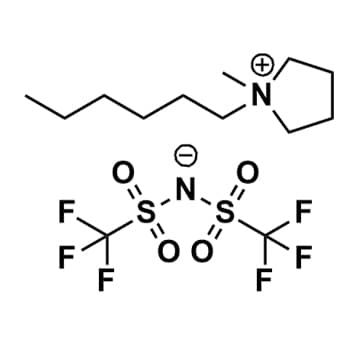
1-Hexyl-1-methylpyrrolidinium bis(trifluoromethylsulfonyl)imide, >99%
Price range: $148.58 through $7,818.96
Product Code: IL-0092-HPCAS NO: 380497-19-8
- Chemical Formula:C13H24F6N2O4S2
- Synonyms: HMPyrr BTA, HMPyrr NTf2, HMPyrr TFSI, HMPyrr BTI, Pyr16 TFSI, Py16 TFSI, N-Hexyl-N-methylpyrrolidinium bis(trifluoromethylsulfonyl)imide
- Weakly-coordinating anion
- Hydrophobic
Conductivity: 1.04 mS/cm (20 °C)
SUM Formula: C13H24F6N2O4S2
Molecular Weight: 450.46
Melting Point: -3 °C
Density: 1.34 g/cm³ (25 °C)
Purity: >99%
Viscosity: 108 cP (25 °C)
- SUM Formula: C13H24F6N2O4S2
- Molecular Weight: 450.46
- Melting Point: -3 °C
- Density: 1.34 g/cm³ (25 °C)
- Viscosity: 108 cP (25 °C)
1-Hexyl-1-methylpyrrolidinium bis(trifluoromethylsulfonyl)imide, CAS: 380497-19-8
Key Applications
Electrochemical Systems
- Employed as a non‑volatile electrolyte or electrolyte additive in lithium, sodium, and multivalent battery research.
- Supports stable SEI formation and improved cycling behavior in high‑voltage systems due to the TFSI anion’s oxidative stability.
- Used in supercapacitors and electrochemical double‑layer capacitors (EDLCs) for enhanced ionic conductivity and wide operating temperature ranges.
- Serves as a solvent and ion‑transport medium in redox‑active systems and electrodeposition studies.
Materials Science and Thin‑Film Processing
- Utilized in ionic‑liquid gating and electrostatic doping of semiconductors, oxides, and 2D materials.
- Functions as a plasticizer or ionic additive in polymer electrolytes and ionogels.
- Applied in surface modification, nanoparticle stabilization, and template‑directed synthesis where hydrophobic, low‑coordinating ionic environments are required.
Separation Science and Extraction
- Effective in liquid–liquid extraction of metal ions, particularly for hydrophobic or soft‑metal species compatible with TFSI‑based ionic phases.
- Used in chromatographic stationary phase development and supported ionic‑liquid membranes for selective transport of organic or organometallic species.
Thermal and Chemical Processing
- Suitable as a high‑temperature heat‑transfer medium or reaction solvent due to its thermal stability and negligible vapor pressure.
- Applied in catalysis, especially in biphasic or immobilized‑catalyst systems where phase separation and recyclability are important.
Tribology and Lubrication
- Incorporated into advanced lubricants and anti‑wear additives for metal and ceramic interfaces, leveraging the TFSI anion’s ability to form stable boundary layers under load.
Please contact us if you want to learn more or need assistance with your order.
Related products
-

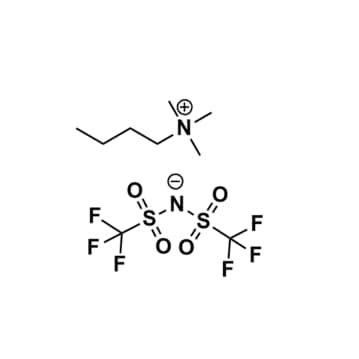
Butyltrimethylammonium bis(trifluoromethylsulfonyl)imide, >99%
Price range: $134.49 through $7,432.55Product Code: IL-0032-HP -
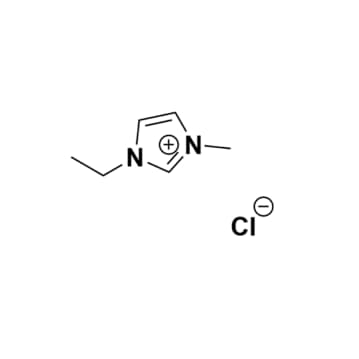
1-Ethyl-3-methylimidazolium chloride, >98%
Price range: $118.78 through $5,050.34Product Code: IL-0093-HP -
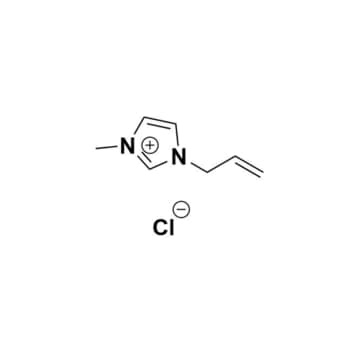
1-Allyl-3-methylimidazolium chloride, >98%
Price range: $106.18 through $4,539.33Product Code: IL-0022-HP -
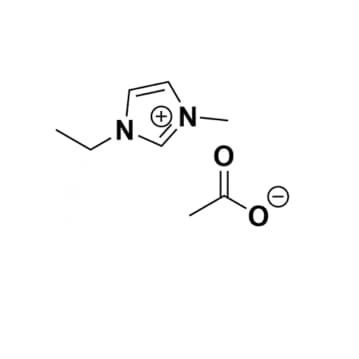
1-Ethyl-3-methylimidazolium acetate, >95%
Price range: $41.04 through $2,378.02Product Code: IL-0189-TG