
1-Heptyl-3-methylimidazolium bromide, >99%
Price range: $190.97 through $8,124.78
Product Code: IL-0298-HPCAS NO: 343851-32-1
- Chemical Formula: C11H21BrN2
- Synonyms: HeptMIM Br, C1C7Im Br, Im17 Br
- Aromatic
SUM Formula: C11H21BrN2
Molecular Weight: 261.20
Melting Point: <RT
Purity: >99%
Viscosity: 6680 cP (25 °C)
- SUM Formula: C11H21BrN2
- Molecular Weight: 261.20
- Melting Point:
- Viscosity: 6680 cP (25 °C)
1-Heptyl-3-methylimidazolium bromide, CAS: 343851-32-1
Key Applications:
Solvent & Reaction Medium
- Serves as a tunable ionic liquid solvent for organic synthesis, benefiting from moderate hydrophobicity and strong ionic character.
- Enhances reaction rates and selectivity in acid‑catalyzed, transition‑metal‑catalyzed, and nucleophilic substitution reactions.
- Useful in biphasic catalysis where partial immiscibility with water supports efficient product separation.
Electrochemical & Energy Applications
- Functions as an electrolyte component or ionic additive in electrochemical systems, including supercapacitors and electrodeposition baths.
- Improves ionic conductivity and electrode interface stability due to the imidazolium cation’s charge transport efficiency.
- Supports electrodeposition of metals such as copper, nickel, and silver under low‑volatility, thermally stable conditions.
Surfactant, Micelle, and Self‑Assembly Systems
- Exhibits amphiphilic behavior suitable for forming micelles, vesicles, and structured phases in aqueous and mixed‑solvent systems.
- Applied in colloid stabilization, nanoparticle templating, and controlled‑size nanomaterial synthesis.
- Useful in studying ionic‑liquid‑based surfactant systems due to its intermediate alkyl chain length (C7), which tunes critical micelle concentration and aggregation behavior.
Extraction, Separation & Purification
- Effective in liquid–liquid extraction of metal ions, dyes, and organic contaminants.
- Bromide counterion supports halide‑assisted extraction mechanisms and coordination with metal complexes.
- Applied in separation of aromatic compounds, phenolics, and bioactive molecules through hydrophobic and π–π interactions.
Biomolecular & Materials Processing
- Used as a stabilizing medium for enzymes and proteins in non‑aqueous or mixed‑solvent environments.
- Supports dissolution and processing of biopolymers such as cellulose and chitin when paired with co‑solvents.
- Enables fabrication of ionic‑liquid‑modified polymers, membranes, and thin films with enhanced conductivity and mechanical properties.
Nanomaterials & Catalysis
- Acts as a templating or stabilizing agent in the synthesis of metal nanoparticles, metal oxides, and carbon nanostructures.
- Enhances dispersion and prevents aggregation due to strong electrostatic and steric stabilization.
- Serves as a medium for catalytic transformations requiring controlled microenvironments.
Please contact us if you want to learn more or need assistance with your order.
Related products
-

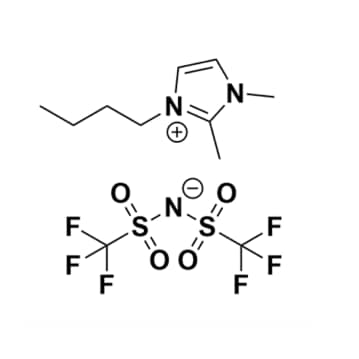
1-Butyl-2,3-dimethylimidazolium bis(trifluoromethylsulfonyl)imide, >99%
Price range: $96.16 through $6,366.66Product Code: IL-0104-HP -

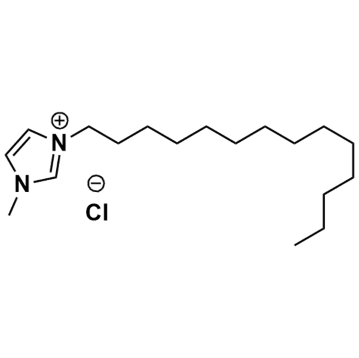
1-Methyl-3-tetradecylimidazolium chloride, >98%
Price range: $243.38 through $2,855.90Product Code: IL-0141-HP -
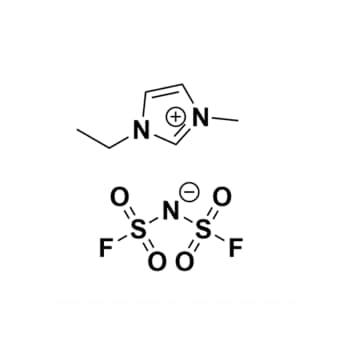
1-Ethyl-3-methylimidazolium bis(fluorosulfonyl)imide, >99%
Price range: $91.96 through $1,224.36Product Code: IL-0342-HP -

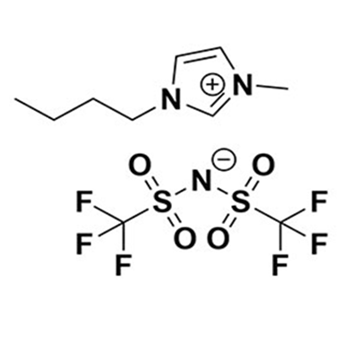
1-Butyl-3-methylimidazolium bis(trifluoromethylsulfonyl)imide, >99.5%
Price range: $106.18 through $5,520.31Product Code: IL-0029-UP