
1-Ethyl-2-methylpyridinium bromide, >99%
Price range: $152.77 through $4,911.66
Product Code: IL-0225-HPCAS NO: 32353-50-7
- Chemical Formula: C8H12BrN
- Synonyms: Et-2-Pic Br, Et2Pic Br, 1-Ethyl-2-picolinium bromide, N-Ethyl-2-methylpyridinium bromide, N-Ethyl-2-picolinium bromide
- Aromatic
Molecular Weight: 202.09
Melting Point: 120°C
Density: 1.519 g/cm³
Purity: >99%
- Molecular Weight: 202.09
- Melting Point: 120°C
- Density: 1.519 g/cm³
1-Ethyl-2-methylpyridinium bromide, CAS: 32353-50-7
Key Applications:
Catalysis & Organic Synthesis
- Functions as a phase‑transfer catalyst in nucleophilic substitution, alkylation, and condensation reactions.
- Enhances reaction rates in solvent‑free and biphasic systems due to efficient ion shuttling.
- Serves as a stabilizing ionic medium for transition‑metal‑catalyzed transformations.
Solvent, Co‑Solvent & Reaction Medium
- Provides a high‑polarity, non‑volatile medium for difficult transformations requiring strong ionic environments.
- Useful for microwave‑assisted synthesis, enabling improved yields and reduced reaction times.
- Supports dissolution of polar organics, halides, and metal salts.
Electrochemical Applications
- Acts as an ionic additive to improve conductivity and ion mobility in electrochemical cells.
- Suitable for electrodeposition studies and redox‑active systems requiring stable pyridinium cations.
- Can be incorporated into protic or aprotic ionic‑liquid blends to tune viscosity and conductivity.
Zinc–Bromine Battery Electrolytes
-
- Serves as a bromide‑rich supporting electrolyte that stabilizes bromine species during charge–discharge cycling.
- Enhances ionic conductivity and improves zinc plating/stripping efficiency through strong ion‑pair interactions.
- Helps suppress dendrite formation by promoting uniform zinc deposition at the electrode surface.
- Supports higher coulombic efficiency and extended cycle life when incorporated into hybrid ionic‑liquid electrolyte formulations.
- Useful in electrolyte optimization studies aimed at reducing volatility, improving thermal stability, and tuning viscosity for flow‑battery architectures.
Materials Science & Polymer Processing
- Used as a structure‑directing agent in polymer templating and nanomaterial synthesis.
- Enhances dispersion of charged species in polymer matrices and composite materials.
- Supports formation of ion‑conductive films and membranes.
Extraction & Separation Processes
- Facilitates selective extraction of metal ions and organic solutes through tunable ion‑pair interactions.
- Useful in biphasic separation systems where high polarity and low volatility are advantageous.
Analytical Chemistry
- Employed as an electrolyte component in chromatography and electrophoresis.
- Stabilizes analytes and improves peak resolution in ionic‑strength‑dependent methods.
Please contact us if you want to learn more or need assistance with your order.
Related products
-

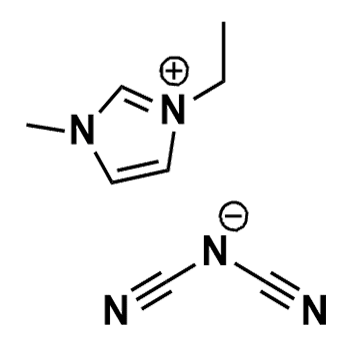
1-Ethyl-3-methylimidazolium dicyanamide, >98%
Price range: $109.03 through $900.25Product Code: IL-0003-HP -

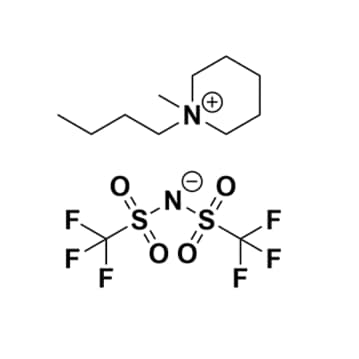
1-Butyl-1-methylpiperidinium bis(trifluoromethylsulfonyl)imide, >99%
Price range: $116.07 through $5,758.00Product Code: IL-0154-HP -

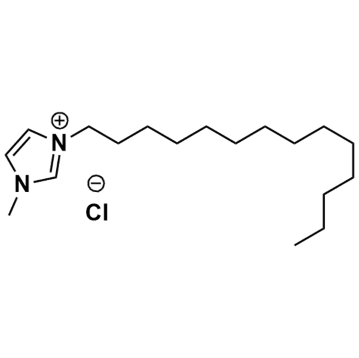
1-Methyl-3-tetradecylimidazolium chloride, >98%
Price range: $243.38 through $2,855.90Product Code: IL-0141-HP -

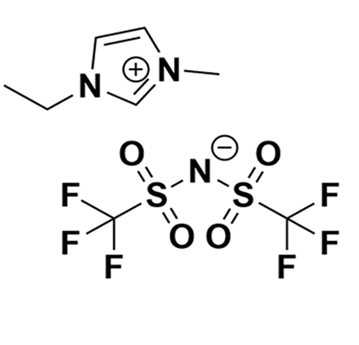
1-Ethyl-3-methylimidazolium bis(trifluoromethylsulfonyl)imide, >99.5%
Price range: $77.88 through $1,109.64Product Code: IL-0023-UP