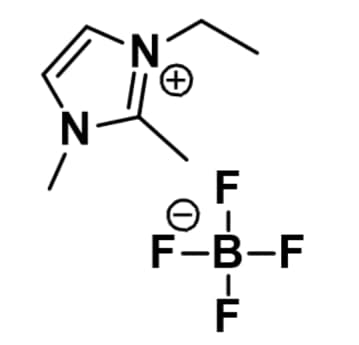
1-Ethyl-2,3-dimethylimidazolium tetrafluoroborate, >98%
Price range: $220.76 through $12,471.65
Product Code: IL-0001-HPCAS NO: 307492-75-7
- Chemical Formula: C7H13BF4N2
- Synonyms: EDiMIM BF4, Im112 BF4
- Anion decomposes slowly in the presence of water.
- Aromatic
SUM Formula: C7H13BF4N2
Molecular Weight: 212.00
Melting Point: 104 °C
Density: 1.21 g/cm³
Purity: >98%
- SUM Formula: C7H13BF4N2
- Molecular Weight: 212.00
- Melting Point: 104 °C
- Density: 1.21 g/cm³
1-Ethyl-2,3-dimethylimidazolium tetrafluoroborate, CAS: 307492-75-7
Key Applications:
1. Electrochemical Systems
- Electrolytes for supercapacitors and batteries
The 2,3‑dimethyl substitution increases cation rigidity and reduces ring acidity, improving electrochemical stability windows. Paired with BF₄⁻, it supports high ionic conductivity and moderate hydrophobicity, making it suitable for double‑layer capacitors and certain non‑aqueous battery chemistries.
- Electrodeposition media
The ionic liquid can dissolve metal salts and support smooth, uniform electrodeposition of metals such as Cu, Ni, and Ag under water‑free conditions.
2. Catalysis and Reaction Media
- Solvent for Lewis‑acid‑catalyzed transformations
BF₄⁻ can weakly coordinate to metal centers, enabling catalytic systems for alkylation, isomerization, and Friedel–Crafts‑type reactions.
- Medium for organometallic catalysis
The steric bulk around the imidazolium ring reduces unwanted side reactions (e.g., carbene formation), making it a stable medium for Pd, Ru, and Ir catalysts.
- Biphasic catalysis
Its density and immiscibility with some organic solvents allow phase‑separable reaction systems.
3. Separation and Extraction
- Selective extraction of metal ions
BF₄⁻‑based ionic liquids can extract transition‑metal complexes, especially when paired with chelating ligands.
- Gas absorption and separation
Although not as strong as fluorosulfonyl or NTf₂⁻ systems, [EMMIm][BF₄] can absorb SO₂, H₂S, and CO₂ to a moderate extent, useful for screening studies or tunable solvent systems.
4. Materials Processing
- Polymerization media
The ionic liquid can act as a solvent or co‑solvent for radical and cationic polymerizations, improving control over molecular weight distribution.
- Nanomaterial synthesis
Its ionic environment stabilizes nanoparticles (Au, Pt, Fe₃O₄) and can influence particle size and morphology.
5. Spectroscopy and Analytical Chemistry
- Matrix or solvent for electrochemical and spectroscopic studies
Low volatility and good conductivity make it suitable for cyclic voltammetry, impedance spectroscopy, and NMR studies of reactive intermediates.
- Sample preparation
Useful in dispersive liquid–liquid microextraction (DLLME) for hydrophobic analytes.
6. General Solvent and Process Uses
- Non‑volatile replacement for traditional organic solvents
Its stability and low vapor pressure support use in high‑temperature or closed‑system processes.
- Ionic‑liquid‑based lubricants and additives
BF₄⁻ systems can reduce friction and wear in metal–metal interfaces, though NTf₂⁻ salts are more common.
Please contact us if you want to learn more or need assistance with your order.
1-Ethyl-2,3-dimethylimidazolium tetrafluoroborate (CAS: 307492-75-7) is an imidazolium-based ionic liquid developed for research and industrial applications in electrochemistry and materials science. This compound combines a 1-ethyl-2,3-dimethylimidazolium cation with a tetrafluoroborate anion. Supplied at a purity of >98%, it is a white to off-white crystalline solid at room temperature and becomes a liquid upon heating.
Properties:
| Property | Value |
| CAS Number | 307492-75-7 |
| Molecular Formula | C₇H₁₃BF₄N₂ |
| Molecular Weight | 212.00 g/mol |
| Purity | >98% |
| Melting Point | 104 °C |
| Density | 1.21 g/cm³ (at 25 °C) |
| Viscosity | Not Available |
| Electrochemical Window | Not Available |
Handling and Storage:
- Moisture Sensitivity: Store and handle under dry conditions to avoid hydrolysis of the tetrafluoroborate anion.
- Storage Conditions: Keep in a tightly sealed container at 15–25 °C, in a dry, well-ventilated place away from moisture and direct sunlight.
- Safety Precautions: Always handle with gloves, safety glasses, and a lab coat. Consult the Safety Data Sheet (SDS) for comprehensive safety guidelines.
Additional information
| Weight | N/A |
|---|---|
| Qty | 25 Grams, 50 Grams, 100 Grams, 250 Grams, 500 Grams, 1000 Grams, 5000 Grams |
You may also like…
-

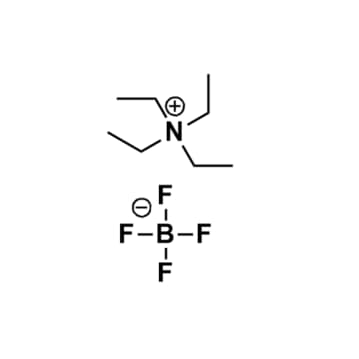
Tetraethylammonium Tetrafluoroborate, >98%
Price range: $124.47 through $774.16Product Code: IL-0348-HP -
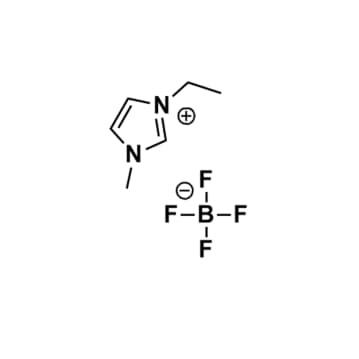
1-Ethyl-3-methylimidazolium tetrafluoroborate, >99%
Price range: $69.34 through $508.16Product Code: IL-0006-UP -
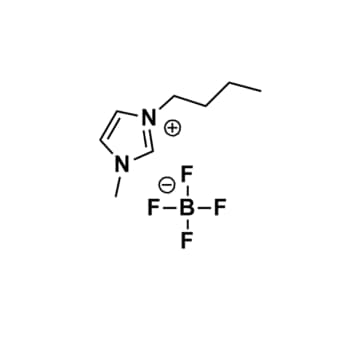
1-Butyl-3-methylimidazolium tetrafluoroborate, >99%
Price range: $52.41 through $2,870.60Product Code: IL-0012-HP
Related products
-

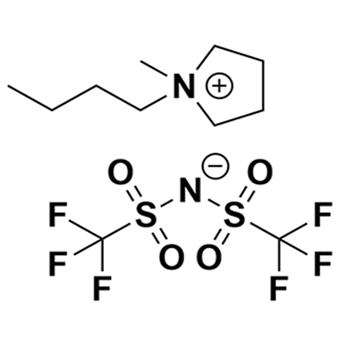
1-Butyl-1-methylpyrrolidinium bis(trifluoromethylsulfonyl)imide, >99.5%
Price range: $106.05 through $1,379.98Product Code: IL-0035-UP -
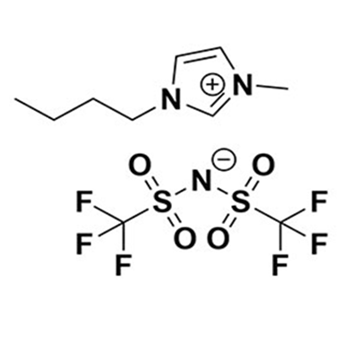
1-Butyl-3-methylimidazolium bis(trifluoromethylsulfonyl)imide, >99.5%
Price range: $106.18 through $5,520.31Product Code: IL-0029-UP -
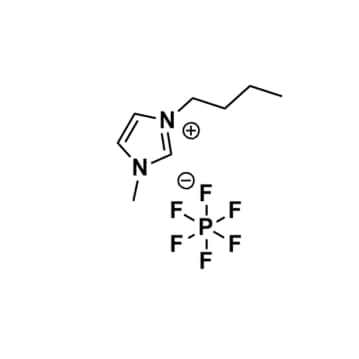
1-Butyl-3-methylimidazolium hexafluorophosphate, >99%
Price range: $57.97 through $3,268.25Product Code: IL-0011-HP -
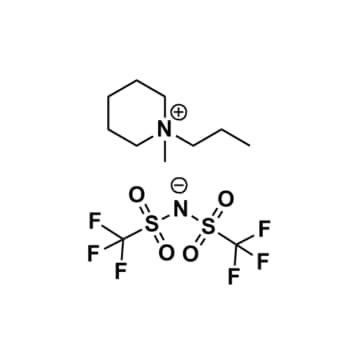
1-Methyl-1-propylpiperidinium bis(trifluoromethylsulfonyl)imide, >99%
Price range: $116.07 through $7,223.03Product Code: IL-0045-HP