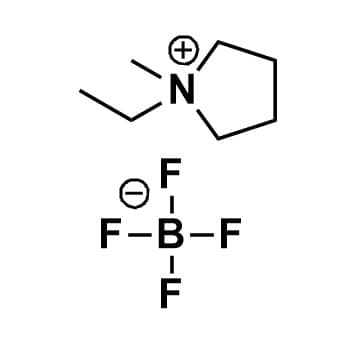
1-Ethyl-1-methylpyrrolidinium tetrafluoroborate, >98%
Price range: $333.99 through $14,662.76
Product Code: IL-0165-HPCAS NO: 117947-85-0
- Chemical Formula: C7H16BF4N
- Synonyms: EMPyrr BF4, PYR12 BF4, PY12 BF4, N-Ethyl-N-methylpyrrolidinium tetrafluoroborate
- Anion decomposes slowly in the presence of water
- Weakly-Coordinating Anion
- Hydrophobic
For Ultra-Purity of >99%, refer to IL-0165-UP
SUM Formula: C7H16F6NP
Molecular Weight: 201.01
Melting Point: 292 °C
Purity: >98%
- SUM Formula: C7H16F6NP
- Molecular Weight: 201.01
- Melting Point: 292 °C
1-Ethyl-1-methylpyrrolidinium tetrafluoroborate, CAS: 117947-85-0
Key Applications:
Electrochemical Systems
- Employed as a high‑conductivity electrolyte in supercapacitors, redox‑flow systems, and next‑generation batteries.
- Supports stable electrode interfaces due to its wide electrochemical window and low flammability.
- Used in electrodeposition of metals and alloys, enabling smooth, uniform coatings under water‑free conditions.
Catalysis & Synthesis
- Functions as a non‑volatile reaction medium for organic and organometallic transformations requiring controlled polarity.
- Enhances selectivity and yield in transition‑metal‑catalyzed reactions by stabilizing reactive intermediates.
- Serves as a phase‑transfer medium for biphasic catalytic systems.
Materials Processing
- Utilized in nanomaterial dispersion and stabilization, particularly for carbon nanostructures and metal nanoparticles.
- Acts as a templating or structuring agent in polymer and porous‑material synthesis.
- Supports ionic‑liquid‑assisted sol–gel processes for advanced ceramics and hybrid materials.
Thermal & Chemical Stability Applications
- Suitable for high‑temperature lubrication and anti‑wear formulations where volatility must be minimized.
- Used in heat‑transfer and thermal‑management fluids requiring ionic conductivity and chemical inertness.
- Provides a stable medium for gas absorption studies, including CO₂ and SO₂ capture research.
Separation & Extraction
- Applied in liquid–liquid extraction of metal ions, aromatic hydrocarbons, and polar organics.
- Supports selective dissolution of biomass components (cellulose, lignin) in pretreatment workflows.
- Enables ionic‑liquid‑based chromatography and membrane‑separation research.
Please contact us if you want to learn more or need assistance with your order.
Related products
-

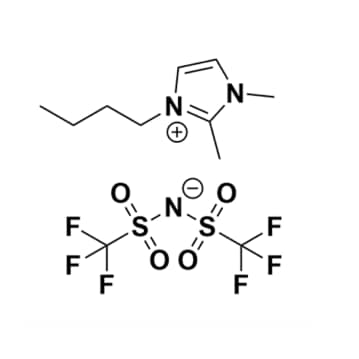
1-Butyl-2,3-dimethylimidazolium bis(trifluoromethylsulfonyl)imide, >99%
Price range: $96.16 through $6,366.66Product Code: IL-0104-HP -
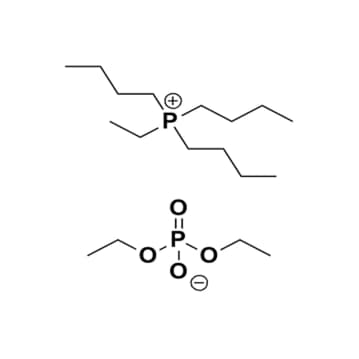
Tributylethylphosphonium diethyl phosphate, >95%
Price range: $134.35 through $1,582.45Product Code: IN-0018-TG -
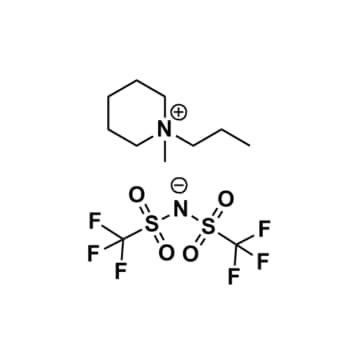
1-Methyl-1-propylpiperidinium bis(trifluoromethylsulfonyl)imide, >99%
Price range: $116.07 through $7,223.03Product Code: IL-0045-HP -
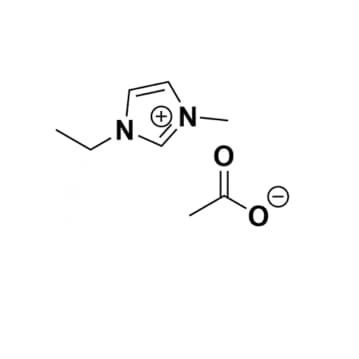
1-Ethyl-3-methylimidazolium acetate, >95%
Price range: $41.04 through $2,378.02Product Code: IL-0189-TG