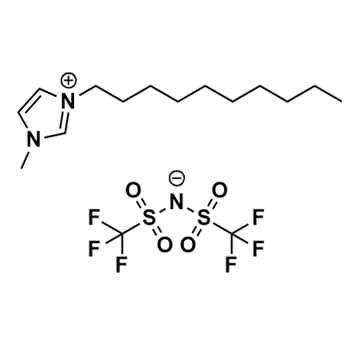
1-Decyl-3-methylimidazolium bis(trifluoromethylsulfonyl)imide, >98%
Price range: $186.77 through $10,270.52
Product Code: IL-0100-HPCAS NO: 433337-23-6
- Chemical Fr.: C16H27F6N3O4S2
- Synonyms: DecMIM BTA, DecMIM NTf2, DecMIM TFSI, DecMIM BTI, C1C10Im TFSI, Im1,10 BTA
- Weakly-coordinating anion
- Hydrophobic
- Aromatic
Conductivity: 0.76 mS/cm (24 °C)
SUM Formula: C16H27F6N3O4S2
Molecular Weight: 503.53
Melting Point: -2 °C
Density: 1.27 g/cm³ (30 °C)
ECW: 4.6 V
Purity: >98%
Viscosity: 113 cP (25 °C)
- SUM Formula: C16H27F6N3O4S2
- Molecular Weight: 503.53
- Melting Point: -2 °C
- Density: 1.27 g/cm³ (30 °C)
- ECW: 4.6 V
- Viscosity: 113 cP (25 °C)
1-Decyl-3-methylimidazolium bis(trifluoromethylsulfonyl)imide, CAS: 433337-23-6
Key Applications:
Electrochemical Systems
- Serves as a hydrophobic ionic liquid electrolyte for supercapacitors, lithium‑free metal batteries, and high‑voltage electrochemical cells, where the NTf₂⁻ anion provides wide electrochemical stability windows.
- Enhances interfacial stability in carbon‑based electrodes and metallic anodes, particularly in systems requiring low moisture sensitivity.
- Used as a component in ionic liquid–polymer gel electrolytes, improving mechanical flexibility and ionic conductivity in solid‑state devices.
Phase‑Transfer & Separation Science
- Functions as a hydrophobic extraction medium for metal ions, organic pollutants, and hydrophobic organics due to its long C10 alkyl chain and low miscibility with water.
- Applied in liquid–liquid extraction, supported ionic liquid membranes (SILMs), and biphasic catalytic systems, where phase separation and recyclability are essential.
- Effective in CO₂ capture and gas separation membranes, leveraging the NTf₂⁻ anion’s high gas solubility.
Catalysis & Organic Synthesis
- Acts as a non‑volatile, thermally stable solvent for transition‑metal catalysis, C–C coupling, oxidations, and acid‑catalyzed transformations.
- Provides microphase structuring that enhances selectivity in biphasic catalytic systems and facilitates catalyst recovery.
- Serves as a medium for ionic liquid–assisted nanoparticle synthesis, stabilizing metal nanoparticles and controlling growth kinetics.
Materials Science & Nanotechnology
- Used in the fabrication of ionic liquid–modified polymers, ion gels, and nanocomposites, improving flexibility, conductivity, and thermal stability.
- Acts as a templating or dispersing agent in the synthesis of metal oxides, carbon nanomaterials, and nanostructured catalysts.
- Enhances performance in tribological coatings and lubricants, where hydrophobic ionic liquids reduce friction and wear under extreme conditions.
Surface & Interface Engineering
- Applied as a surface modifier for metals, oxides, and carbon materials, improving corrosion resistance and altering wettability.
- Used in self‑assembled ionic liquid layers to tune interfacial charge density and adhesion in electrochemical and sensing applications.
Thermal & Chemical Process Engineering
- Serves as a high‑stability heat‑transfer medium in low‑volatility thermal systems.
- Employed in extractive distillation, reactive separations, and solvent replacement strategies where conventional organic solvents pose safety or environmental challenges.
Please contact us if you want to learn more or need assistance with your order.
Related products
-

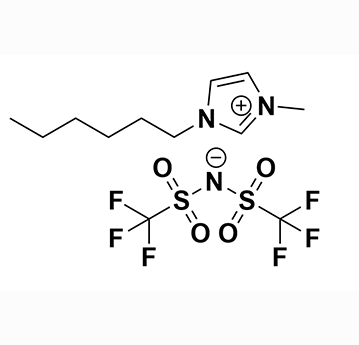
1-Hexyl-3-methylimidazolium bis(trifluoromethylsulfonyl)imide, >99%
Price range: $137.20 through $7,436.75Product Code: IL-0098-HP -

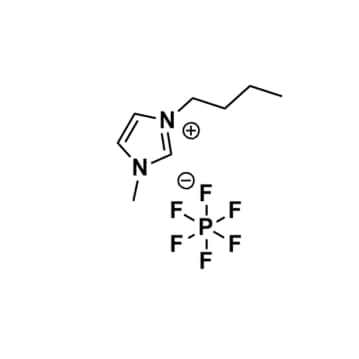
1-Butyl-3-methylimidazolium hexafluorophosphate, >99%
Price range: $57.97 through $3,268.25Product Code: IL-0011-HP -

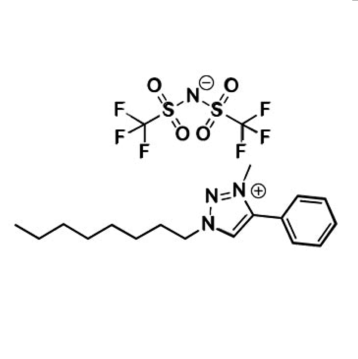
3-methyl-1-octyl-4-phenyl-triazolium bis((trifluoromethyl)sulfonyl)amide
Product Code: TzPhC8FS -
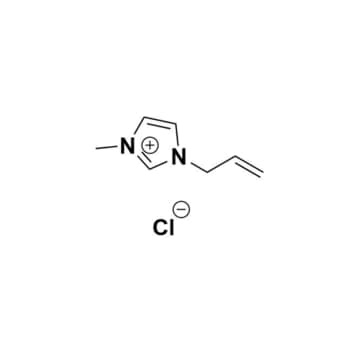
1-Allyl-3-methylimidazolium chloride, >98%
Price range: $106.18 through $4,539.33Product Code: IL-0022-HP