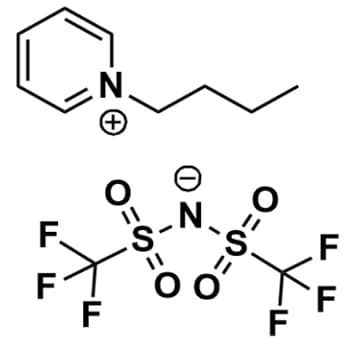
1-Butylpyridinium bis(trifluoromethylsulfonyl)imide, >99%
Price range: $171.19 through $9,494.86
Product Code: IL-0213-HPCAS NO: 187863-42-9
- Chemical Formula: C11H14F6N2O4S2
- Synonyms: [BPy][Tf₂]
- Weakly-coordinating anion
- Hydrophobic
- Aromatic
Conductivity: 1.54 mS/cm (25 °C)
SUM Formula: C11H14F6N2O4S2
Molecular Weight: 416.36
Melting Point: 26 °C
Density: 1.45 g/cm³ (23 °C)
ECW: 4.2 V
Purity: >99%
Viscosity: 59.0 cP (25 °C)
- SUM Formula: C11H14F6N2O4S2
- Molecular Weight: 416.36
- Melting Point: 26 °C
- Density: 1.45 g/cm³ (23 °C)
- ECW: 4.2 V
- Viscosity: 59.0 cP (25 °C)
1-Butylpyridinium bis(trifluoromethylsulfonyl)imide, CAS: 187863-42-9
Key Applications
Electrochemical Systems
- Serves as a high‑stability ionic liquid electrolyte component for lithium, sodium, and multivalent metal batteries.
- Enhances ionic conductivity and electrochemical window in supercapacitors and hybrid capacitive devices.
- Used as a solvent or co‑solvent in electrodeposition of metals and alloys, particularly where moisture‑free, thermally stable media are required.
Catalysis and Synthesis
- Functions as a non‑volatile, thermally robust reaction medium for transition‑metal‑catalyzed transformations.
- Supports biphasic catalysis where phase separation and catalyst recyclability are desired.
- Provides a tunable, low‑nucleophilicity environment for acid‑sensitive or high‑temperature reactions.
Materials Science and Thin‑Film Processing
- Employed in fabrication of polymer electrolytes and ion‑conducting membranes.
- Acts as a plasticizer or ionic dopant in conductive polymers and composite materials.
- Utilized in surface modification and thin‑film deposition processes requiring low vapor pressure and high thermal stability.
Separation Science
- Applied in liquid–liquid extraction systems for selective separation of metal ions, aromatic hydrocarbons, and other hydrophobic analytes.
- Used in supported ionic liquid membranes (SILMs) for gas separation and pervaporation.
Thermal and Tribological Applications
- Serves as a high‑temperature lubricant base fluid due to its low volatility and chemical inertness.
- Provides stable performance in vacuum, aerospace, and high‑load mechanical environments.
Analytical Chemistry
- Used as an ionization medium or additive in mass spectrometry workflows to improve ion transport and reduce fragmentation.
- Supports electroanalytical methods requiring wide electrochemical windows and low background currents.
Please contact us if you want to learn more or need assistance with your order.
Related products
-

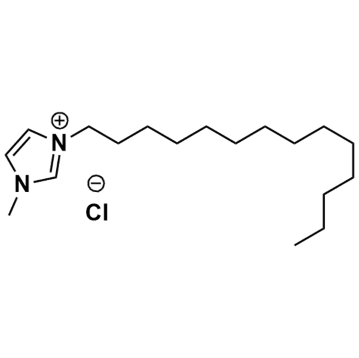
1-Methyl-3-tetradecylimidazolium chloride, >98%
Price range: $243.38 through $2,855.90Product Code: IL-0141-HP -

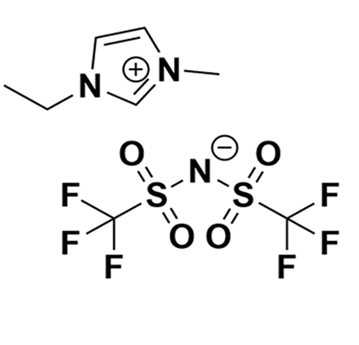
1-Ethyl-3-methylimidazolium bis(trifluoromethylsulfonyl)imide, >99.5%
Price range: $77.88 through $1,109.64Product Code: IL-0023-UP -
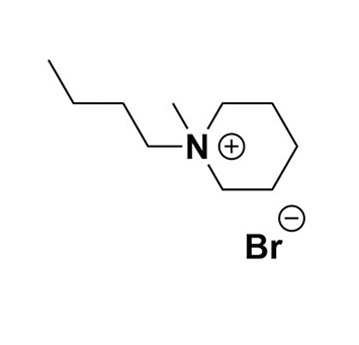
1-Butyl-1-methylpiperidinium bromide, >99%
Price range: $151.42 through $3,466.39Product Code: IL-0153-HP -

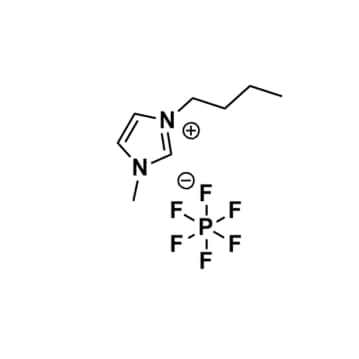
1-Butyl-3-methylimidazolium hexafluorophosphate, >99%
Price range: $57.97 through $3,268.25Product Code: IL-0011-HP