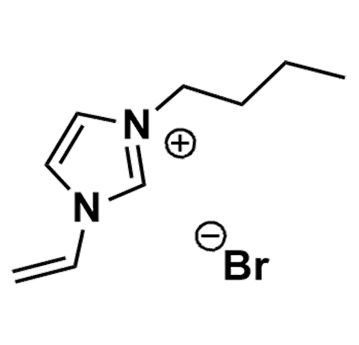
1-Butyl-3-vinylimidazolium bromide, >98%
Price range: $260.45 through $2,849.34
Product Code: IL-0292-HPCAS NO: 34311-90-5
- Chemical Formula: C9H15BrN2
- Synonyms: BVIM Br
- Polymerizable
- Aromatic
SUM Formula: C9H15BrN2
Molecular Weight: 231.13
Melting Point: 82 °C
Purity: >98%
- SUM Formula: C9H15BrN2
- Molecular Weight: 231.13
- Melting Point: 82 °C
1-Butyl-3-vinylimidazolium bromide, CAS: 34311-90-5
Key Applications:
Polymer and Materials Synthesis
- Serves as a reactive ionic monomer for producing poly(ionic liquid)s (PILs) with tailored mechanical, thermal, and ion‑transport properties.
- Enables in situ polymerization within composites, membranes, and coatings to impart ionic conductivity and enhanced interfacial adhesion.
- Useful in surface‑grafted polymer brushes, allowing covalent anchoring of ionic domains on substrates for antifouling, lubrication, or charge‑modulating surfaces.
- Supports crosslinked ionogel formation, where the vinyl group participates in network formation while the ionic core provides conductivity and stability.
Electrochemical and Energy‑Related Uses
- Functions as a precursor to polymer electrolytes with high ionic mobility and tunable glass‑transition behavior.
- Applied in solid‑state or quasi‑solid‑state electrolytes for batteries, supercapacitors, and electrochromic devices.
- Acts as a conductive binder or matrix in electrode fabrication, improving charge transport and mechanical cohesion.
Catalysis and Reaction Media
- Provides a low‑volatility, thermally stable ionic environment for catalytic transformations, especially polymerization, alkylation, and transition‑metal‑mediated reactions.
- The vinyl functionality allows post‑reaction immobilization of catalysts through polymerization, enabling catalyst recovery and reuse.
- Useful as a phase‑transfer medium for reactions involving polar or ionic intermediates.
Separation Science and Analytical Applications
- Serves as a stationary‑phase modifier in chromatography, where the vinyl group can be polymerized to create stable ionic coatings.
- Enhances selective extraction of metal ions, organic acids, and charged analytes due to its tunable polarity and ionic character.
- Supports membrane fabrication for ion‑exchange, pervaporation, and selective permeation processes.
Advanced Functional Materials
- Enables fabrication of stimuli‑responsive materials, where polymerized ionic domains respond to electric fields, humidity, or chemical triggers.
- Useful in optical and dielectric materials, leveraging the ionic core and polymerizable group to tune refractive index, dielectric constant, and mechanical flexibility.
- Supports additive manufacturing formulations, particularly UV‑curable systems requiring ionic functionality.
Please contact us if you want to learn more or need assistance with your order.
Related products
-

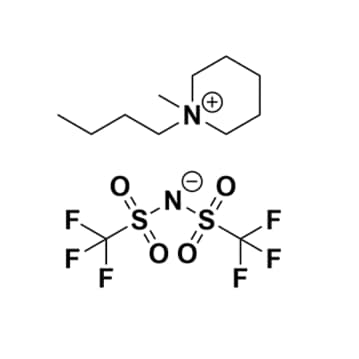
1-Butyl-1-methylpiperidinium bis(trifluoromethylsulfonyl)imide, >99%
Price range: $116.07 through $5,758.00Product Code: IL-0154-HP -
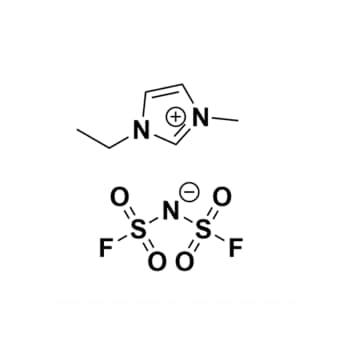
1-Ethyl-3-methylimidazolium bis(fluorosulfonyl)imide, >99%
Price range: $91.96 through $1,224.36Product Code: IL-0342-HP -
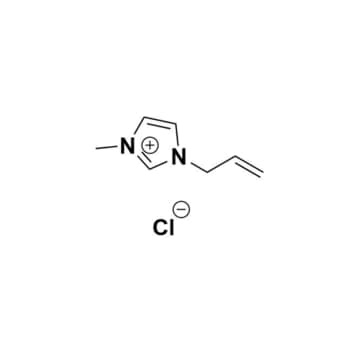
1-Allyl-3-methylimidazolium chloride, >98%
Price range: $106.18 through $4,539.33Product Code: IL-0022-HP -
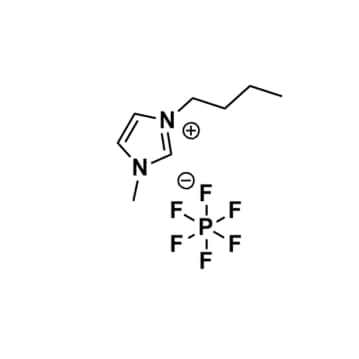
1-Butyl-3-methylimidazolium hexafluorophosphate, >99%
Price range: $57.97 through $3,268.25Product Code: IL-0011-HP