![1-Benzyl-3-methylimidazolium tetrafluoroborate, 99%,500996-04-3]](https://mlhxrkjoggqr.i.optimole.com/w:359/h:345/q:mauto/f:best/https://roco.global/wp-content/uploads/2022/11/IL-0193-HP.png)
1-Benzyl-3-methylimidazolium tetrafluoroborate, >99%
Price range: $137.20 through $8,661.24
Product Code: IL-0193-HPCAS NO: 500996-04-3
- Chemical Formula: C11H13BF4N2
- Synonyms: BenzMIM BF4
- Anion decomposes slowly in the presence of water
- Aromatic
SUM Formula: C11H13BF4N2
Molecular Weight: 260.04
Melting Point: 78 °C
Purity: >99%
- SUM Formula: C11H13BF4N2
- Molecular Weight: 260.04
- Melting Point: 78 °C
1-Benzyl-3-methylimidazolium tetrafluoroborate, CAS: 500996-04-3
Key Applications:
Advanced Solvent for Organic Synthesis
- Provides a polar, low‑volatility medium that stabilizes reactive intermediates.
- Hydrogen‑bond donor/acceptor interactions from the imidazolium ring enhance solvation of heteroatom‑rich substrates and improve reaction selectivity.
- Supports alkylation, oxidation, and condensation reactions where aromatic cation structures improve substrate compatibility.
Medium for Phase‑Transfer and Biphasic Catalysis
- Aromatic benzyl substituent improves partitioning between organic and ionic phases.
- Hydrogen‑bonding interactions modulate catalyst mobility and can increase turnover in biphasic systems.
- Enables efficient catalyst recycling and simplified product separation.
Electrochemical and Redox‑Active Systems
- BF₄⁻ anion provides a wide electrochemical stability window suitable for high‑purity redox studies.
- Hydrogen‑bonding interactions influence ion mobility and electrode interfacial behavior, supporting mechanistic electrochemistry research.
Stabilizing Matrix for Metal Complexes
- Acts as a solvation environment that stabilizes organometallic complexes through π–π interactions and hydrogen bonding.
- Enhances solubility of aromatic ligands and π‑rich substrates.
Extraction and Separation Processes
- Effective for extracting aromatic compounds, dyes, and polycyclic organics due to π–π stacking from the benzyl group.
- Hydrogen‑bonding capacity improves selectivity for polar analytes and heteroatom‑containing species.
Material Science and Polymer Processing
- Useful in processing π‑conjugated polymers and aromatic monomers.
- Hydrogen‑bonding interactions can tune polymer morphology, conductivity, and film‑forming behavior.
- Supports development of ionic‑liquid‑modified polymer blends.
Research on Structure–Property Relationships
- Frequently used to study how aromatic functionalization and hydrogen‑bonding capability influence viscosity, polarity, and solvation behavior.
- Supports computational and experimental benchmarking of imidazolium ionic liquid families.
Please contact us if you want to learn more or need assistance with your order.
Related products
-

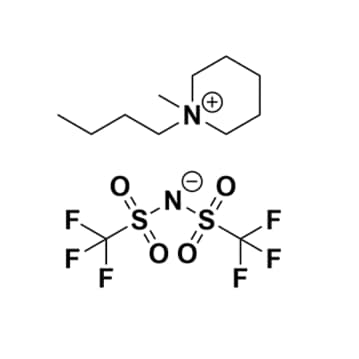
1-Butyl-1-methylpiperidinium bis(trifluoromethylsulfonyl)imide, >99%
Price range: $116.07 through $5,758.00Product Code: IL-0154-HP -

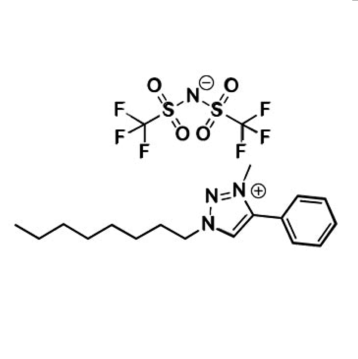
3-methyl-1-octyl-4-phenyl-triazolium bis((trifluoromethyl)sulfonyl)amide
Product Code: TzPhC8FS -

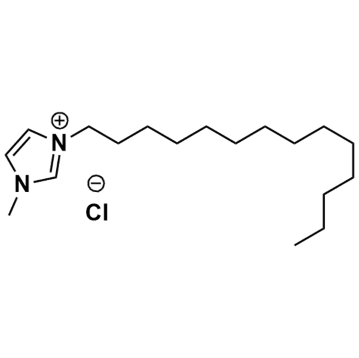
1-Methyl-3-tetradecylimidazolium chloride, >98%
Price range: $243.38 through $2,855.90Product Code: IL-0141-HP -
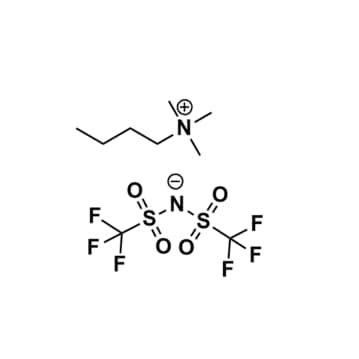
Butyltrimethylammonium bis(trifluoromethylsulfonyl)imide, >99%
Price range: $134.49 through $7,432.55Product Code: IL-0032-HP