
1-Benzyl-3-methylimidazolium dicyanamide, >98%
Price range: $158.46 through $9,207.60
Product Code: IL-0242-HPCAS NO: 958445-60-8
- Chemical Formula: C13H13N5
- Synonyms: BenzMIM DCA
- Hydrophilic
- Aromatic
Conductivity: 2.95 mS/cm (30 °C)
SUM Formula: C13H13N5
Molecular Weight: 239.28
Melting Point: -21 °C
Density: 1.16 g/cm³ (24 °C)
Purity: >98%
Viscosity: 78.5 cP (25°C)
- SUM Formula: C13H13N5
- Molecular Weight: 239.28
- Melting Point: -21 °C
- Density: 1.16 g/cm³ (24 °C)
- Viscosity: 78.5 cP (25°C)
1-Benzyl-3-methylimidazolium dicyanamide, CAS: 958445-60-8
Key Applications:
1. Extraction and Separation Processes
- Used as a designer solvent for liquid–liquid extraction, especially for separating organic solutes with tunable polarity.
- Dicyanamide anions often enhance solubility for nitriles, aromatics, and polar organics, making this cation–anion pair suitable for selective separations.
- Applicable in metal ion extraction systems where low viscosity and high polarity improve mass transfer.
2. Thermodynamic and Activity‑Coefficient Studies
- Employed as a reference ionic liquid for measuring activity coefficients at infinite dilution, phase equilibria, and solvation behavior.
- The cited study by Durski et al. (2018) demonstrates the relevance of dicyanamide ILs in thermodynamic modeling and solvent‑solute interaction analysis.
- Useful for benchmarking solvation parameters in computational chemistry and COSMO‑RS workflows.
3. Reaction Media for Organic Synthesis
- The benzyl substituent increases aromatic character and can influence π–π interactions, making this IL suitable for reactions involving aromatic substrates.
- Dicyanamide anions can support catalytic cycles requiring moderate basicity or nucleophilicity.
- Potential medium for SN1/SN2 reactions, transition‑metal catalysis, and photochemical transformations.
4. Electrochemical and Conductive Applications
- Moderate viscosity (78.5 cP at 25 °C) and measurable conductivity (2.95 mS/cm at 30 °C) support use in electrochemical studies.
- Can serve as a solvent or co‑solvent in redox chemistry, electrodeposition research, and ionic‑liquid‑based electrolytes where aromatic cations are advantageous.
5. Materials Science and Polymer Processing
- Suitable as a plasticizer or processing aid for polymers requiring high‑polarity, low‑volatility solvents.
- Dicyanamide ILs are often explored in polyurethane chemistry, polymer dissolution, and controlled morphology development.
- The benzyl group may enhance compatibility with aromatic polymers or resins.
6. Solvation and Spectroscopic Studies
- Used to probe solute–solvent interactions, hydrogen‑bonding networks, and ion‑pairing behavior.
- The aromatic cation provides distinct spectroscopic signatures useful in NMR, IR, and solvatochromic analyses.
7. Potential Use in Pharmaceutical and Fine‑Chemical Processing
- As a tunable, non‑volatile solvent, it can support crystallization, purification, and formulation studies for small molecules.
- The dicyanamide anion’s coordination behavior can influence solubility and polymorph control.
Please contact us if you want to learn more or need assistance with your order.
Related products
-

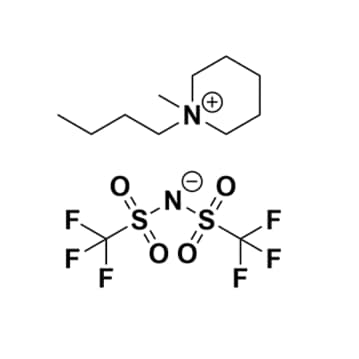
1-Butyl-1-methylpiperidinium bis(trifluoromethylsulfonyl)imide, >99%
Price range: $116.07 through $5,758.00Product Code: IL-0154-HP -
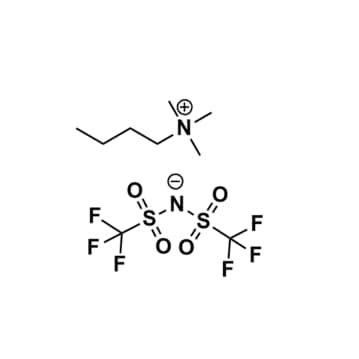
Butyltrimethylammonium bis(trifluoromethylsulfonyl)imide, >99%
Price range: $134.49 through $7,432.55Product Code: IL-0032-HP -
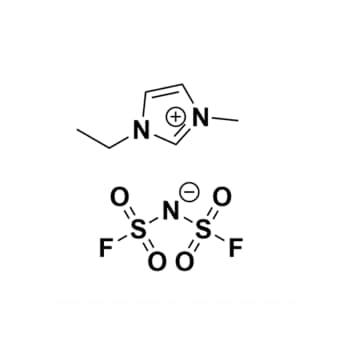
1-Ethyl-3-methylimidazolium bis(fluorosulfonyl)imide, >99%
Price range: $91.96 through $1,224.36Product Code: IL-0342-HP -

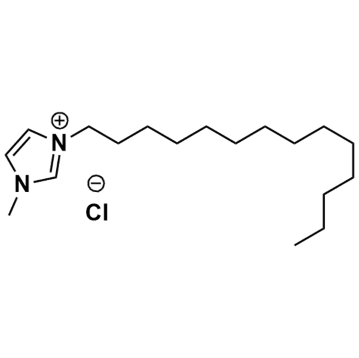
1-Methyl-3-tetradecylimidazolium chloride, >98%
Price range: $243.38 through $2,855.90Product Code: IL-0141-HP