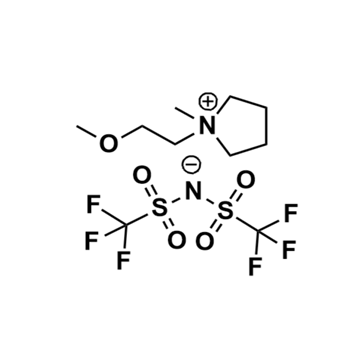
1-(2-Methoxyethyl)-1-methylpyrrolidinium bis(trifluoromethylsulfonyl)imide, >98%
Price range: $69.34 through $1,102.60
Product Code: IL-0359-HPCAS NO: 757240-24-7
- Chemical Formula: C10H18N2O5S2F6
- Synonyms: MeOEtMPyrr BTA
Conductivity: 2,503 mS/cm
SUM Formula: C10H18N2O5S2F6
Molecular Weight: 424.38
Melting Point: -55°C
Density: 1.4449 g/cm³
Purity: >98%
Viscosity: 55.1 cP
- SUM Formula: C10H18N2O5S2F6
- Molecular Weight: 424.38
- Melting Point: -55°C
- Density: 1.4449 g/cm³
- Viscosity: 55.1 cP
1-(2-Methoxyethyl)-1-methylpyrrolidinium bis(trifluoromethylsulfonyl)imide, CAS: 757240-24-7
Key Applications:
Electrochemical Systems
- Lithium metal and lithium‑ion battery electrolytes: Ether-functional cation enhances Li⁺ coordination and interfacial stability; TFSI⁻ provides wide electrochemical windows and high oxidative resistance.
- Supercapacitors and hybrid capacitors: Low viscosity relative to longer-chain pyrrolidinium ILs improves ion mobility and reduces ESR.
- Electrodeposition media: Suitable for controlled deposition of reactive or air‑sensitive metals due to negligible vapor pressure and high thermal stability.
Energy and Thermal Management
- Heat‑transfer and thermal‑storage fluids: High thermal stability and low flammability support use in closed-loop systems requiring non‑volatile, non‑corrosive media.
- Electrothermal actuators and devices: Stable ionic conductivity across broad temperature ranges enables consistent performance in thermally cycled environments.
Catalysis and Synthesis
- Solvent and co‑solvent for transition‑metal catalysis: Ether functionality improves solvation of polar substrates while TFSI⁻ maintains low coordinating behavior.
- Medium for selective organic transformations: Supports reactions requiring high polarity, low nucleophilicity, and thermal robustness.
- Phase‑transfer and biphasic catalysis: Immiscibility with many organic solvents enables catalyst recycling and simplified separation.
Materials Science and Polymer Processing
- Polymer electrolytes and ionogels: Forms stable, conductive networks when immobilized in polymer matrices; ether group enhances miscibility with PEG‑based systems.
- Plasticization and processing aid: Reduces Tg in certain engineering polymers and facilitates melt processing under controlled conditions.
- Nanomaterials synthesis: Provides a stable, tunable environment for nanoparticle nucleation and growth with minimized aggregation.
Analytical and Separation Technologies
- Chromatographic stationary‑phase modifier: Tailors polarity and selectivity in IL‑modified phases.
- Electrophoretic media: High ionic strength and low volatility support stable, reproducible separations.
Surface and Interface Engineering
- Lubrication and anti‑wear films: Strong interfacial adsorption and thermal stability enable use in high‑temperature or vacuum tribological systems.
- Surface functionalization medium: Ether group improves compatibility with oxide and polymer surfaces during modification or grafting processes.
Please contact us if you want to learn more or need assistance with your order.
Related products
-

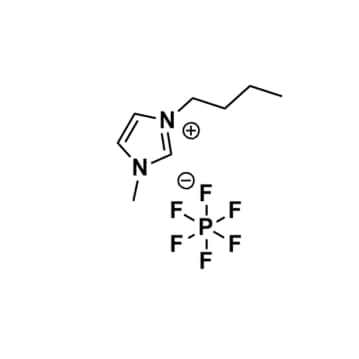
1-Butyl-3-methylimidazolium hexafluorophosphate, >99%
Price range: $57.97 through $3,268.25Product Code: IL-0011-HP -
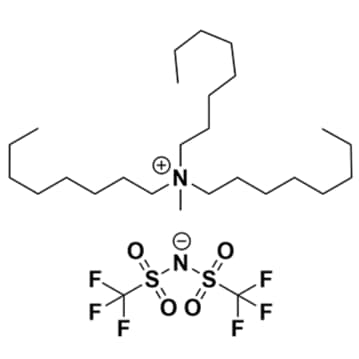
Methyltrioctylammonium bis(trifluoromethylsulfonyl)imide, >99%
Price range: $164.15 through $8,170.01Product Code: IL-0017-HP -

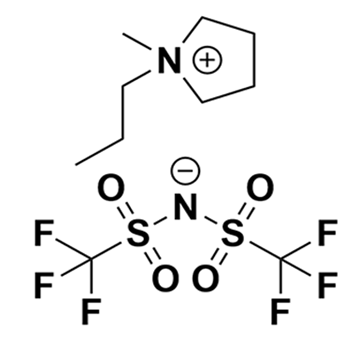
1-Methyl-1-propylpyrrolidinium bis(trifluoromethylsulfonyl)imide, >99.5%
Price range: $106.05 through $1,379.98Product Code: IL-0044-UP -
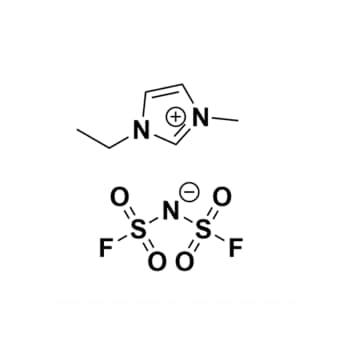
1-Ethyl-3-methylimidazolium bis(fluorosulfonyl)imide, >99%
Price range: $91.96 through $1,224.36Product Code: IL-0342-HP